Curie Brief
Turn on cookies to sign in
Signing in saves your progress to your Curie account. We can only do that with cookies on — turn them on to continue.
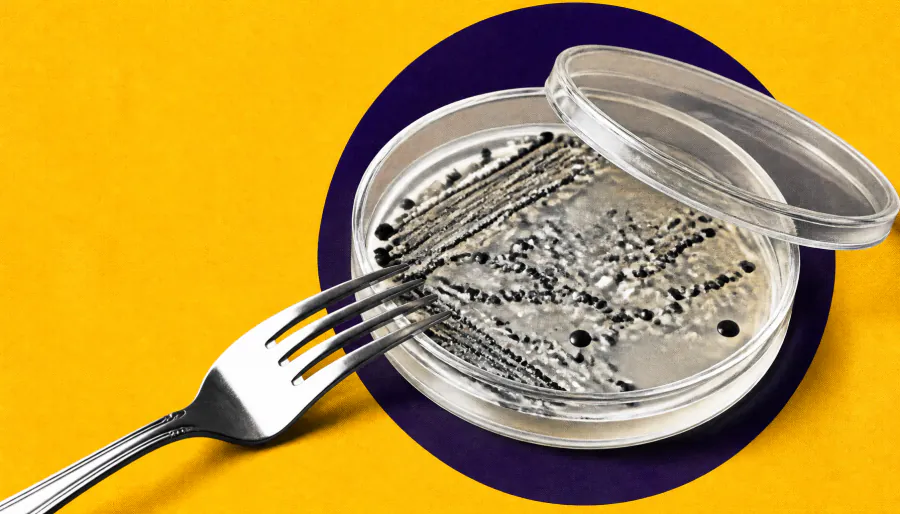
That number on your food label? Your gut bacteria may tell a different story. Researchers at Arizona State University built a mathematical model showing that gut microbes significantly influence how many calories your body actually absorbs — and a high-fiber diet led people to absorb 116 fewer calories per day than a Western diet, without feeling any hungrier.
That number on your food label isn't the final word on your energy intake. Researchers at Arizona State University developed a new mathematical model called DAMM (Digestion, Absorption, and Microbial Metabolism) that tracks how food travels through the digestive tract, how much energy the body absorbs directly, and how gut bacteria process whatever's left over — including producing short-chain fatty acids that the body can still use for fuel.
In a controlled clinical study, participants on a high-fiber, microbiome-enhancing diet absorbed about 116 fewer calories per day than those eating a typical Western diet — and they didn't feel any hungrier. The DAMM model also outperformed the century-old Atwater method in predicting actual calorie absorption by factoring in microbial metabolism.
By the Numbers:
Why it matters: This research could reshape how clinicians think about nutrition, obesity, and metabolic disease. Rather than relying solely on food labels, future dietary guidance may need to account for each patient's unique gut microbiome — opening the door to truly personalized nutrition plans.