Curie Brief
Turn on cookies to sign in
Signing in saves your progress to your Curie account. We can only do that with cookies on — turn them on to continue.
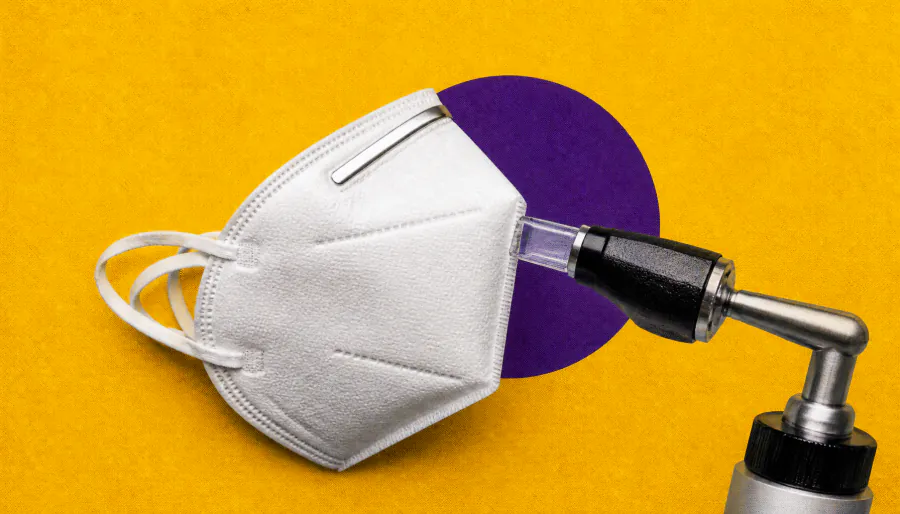
Wearing a face mask doesn't significantly change average eye pressure readings in glaucoma patients — but for some individuals, the difference could matter clinically. A randomized trial of 47 glaucoma patients found IOP varied by less than 0.5 mm Hg across no-mask, surgical mask, and KN95 conditions on average. However, 34% of patients showed differences of 3 mm Hg or more between scenarios.
Good news for glaucoma clinics: face masks don't meaningfully skew intraocular pressure (IOP) readings at the population level. A randomized controlled trial published in the Journal of Glaucoma tested 94 eyes from 47 glaucoma patients, measuring IOP with a Goldmann applanation tonometer under three conditions — no mask, surgical mask, and KN95 mask. Average IOP differed by less than 0.5 mm Hg across all three scenarios, a statistically insignificant gap.
But zoom in on individual patients, and the picture gets more nuanced. About one-third of participants showed IOP differences of at least 3 mm Hg between mask conditions — a gap that could influence clinical decisions in glaucoma management. Researchers attribute this variability to mask fit on different facial structures, patient positioning at the slit lamp, and changes in breathing patterns while masked.
Key Takeaways:
Why it matters: Glaucoma management often turns on small IOP changes, so understanding sources of measurement variability is critical. While routine practice doesn't need to change, clinicians should be alert to mask-related variability — especially when a single reading is driving a treatment call.