Curie Brief
Turn on cookies to sign in
Signing in saves your progress to your Curie account. We can only do that with cookies on — turn them on to continue.
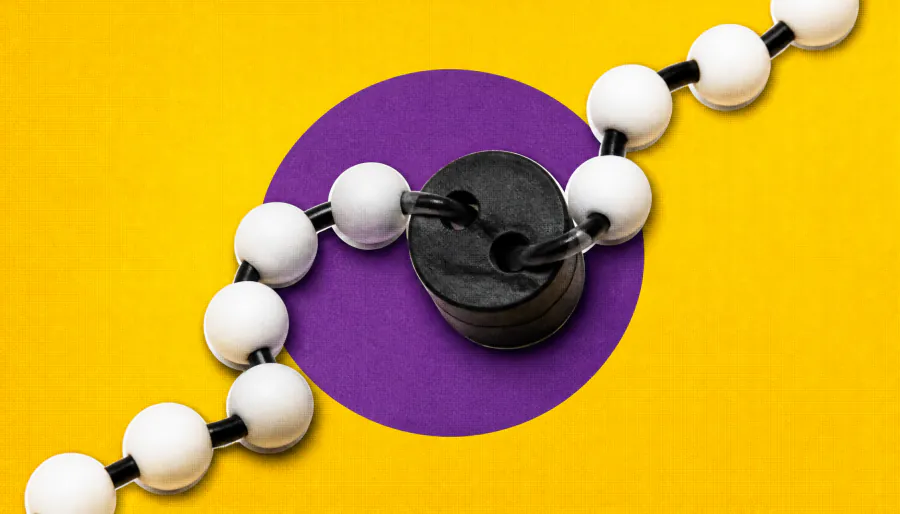
A routine lab experiment led scientists to a microscopic organism that rewrites the genetic rulebook. A freshwater pond protist was found to repurpose two "stop" signals in DNA — signals that normally halt protein production — to encode two entirely different amino acids, something never documented before. The finding reveals surprising flexibility in one of biology's most foundational systems.
What started as a test of a new DNA sequencing technique turned into one of the most unexpected genetic discoveries in recent memory. While analyzing a previously unknown protist (Oligohymenophorea sp. PL0344) collected from a freshwater pond at Oxford University Parks, researchers at the Earlham Institute stumbled upon a genetic code that breaks a rule scientists thought was nearly universal. Two "stop codons" — TAA and TAG, which normally signal cells to stop building a protein — had been repurposed to encode two entirely different amino acids: lysine and glutamic acid, respectively.
This is the first known case where both signals were reassigned to different amino acids, upending the long-held assumption that TAA and TAG always evolve in tandem. Follow-up research published in December 2024 found similar — though distinct — genetic code variations in several other ciliate species from Arctic and Southern Ocean samples, suggesting these rule-breaking codes have evolved independently multiple times.
Key Takeaways:
Why it matters: This discovery challenges one of the most deeply held assumptions in molecular biology and opens the door to finding many more unconventional genetic codes hiding in the microbial world — with potential implications for bioengineering and our understanding of life's evolutionary flexibility.