Curie Brief
Turn on cookies to sign in
Signing in saves your progress to your Curie account. We can only do that with cookies on — turn them on to continue.
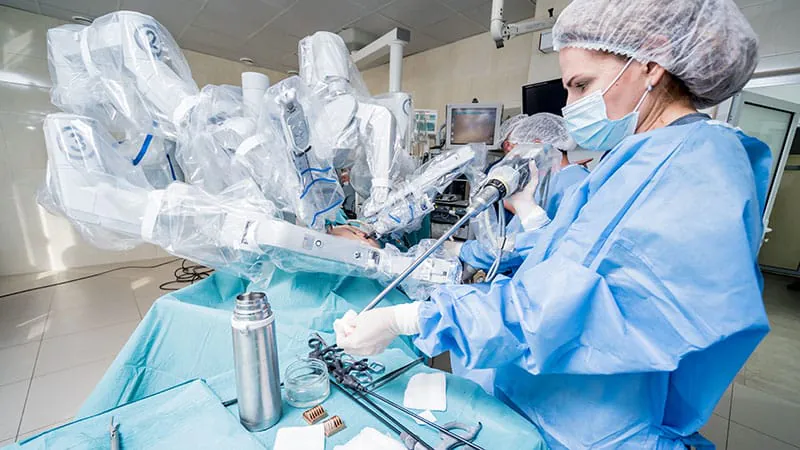
Robot-assisted radical hysterectomy cut intraoperative complications compared to open surgery in early-stage cervical cancer — but the benefit was mostly minor events. A phase 3 trial secondary analysis found no meaningful differences in 30-day postoperative complications, readmissions, or quality of life. Surgeons say perioperative perks alone aren't enough to justify choosing robotic over open surgery.
Robot-assisted radical hysterectomy has long been pitched as a gentler alternative to open surgery for early-stage cervical cancer — but a new secondary analysis of a phase 3 trial tempers some of that enthusiasm. While robotic surgery did reduce intraoperative complications, the difference was driven largely by minor events, and the bigger picture — 30-day postoperative complications, readmissions, and reoperations — looked virtually identical between the two approaches.
The study, published in JAMA Surgery and led by researchers at Karolinska University Hospital in Stockholm, analyzed 900 patients randomized to robot-assisted or open radical hysterectomy. Quality-of-life scores at one month showed only small gains in physical functioning, role functioning, and pain for the robotic group — not enough to shift the clinical calculus significantly.
By the Numbers:
Why it matters: Guidelines already favor open surgery due to worse oncologic outcomes with minimally invasive approaches. This analysis confirms that perioperative advantages of robotic surgery are modest at best — useful context for patient counseling, but not a standalone reason to choose robotic over open surgery.