Curie Brief
Turn on cookies to sign in
Signing in saves your progress to your Curie account. We can only do that with cookies on — turn them on to continue.
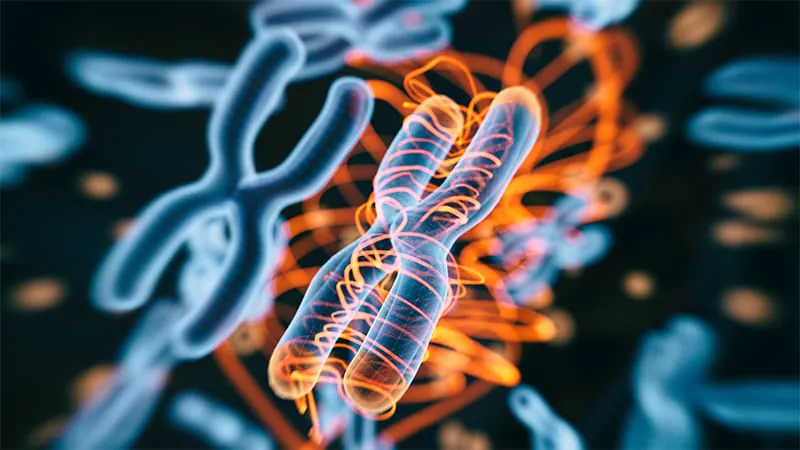
For over three decades, scientists believed humans had 48 chromosomes — not 46. It took better lab techniques and a meticulous cytogeneticist to finally set the record straight in 1956. The correction unlocked a new era of clinical genetics, from diagnosing Down syndrome to discovering the Philadelphia chromosome in leukemia.
For more than 30 years, the scientific world was confidently wrong about something as fundamental as how many chromosomes humans have. The accepted count was 48 — a figure cemented largely by cytologist Theophilus Painter in 1923, even though his own clearest images showed 46. The culprits? Crude preparation techniques, overlapping chromosomes in microscope slides, and the powerful pull of confirmation bias: researchers who expected 48 tended to see 48.
The correction came in January 1956, when Joe Hin Tjio and Albert Levan published findings in Hereditas showing that normal human somatic cells contain 46 chromosomes. Tjio's meticulous photography skills and high-quality fetal cell cultures — combined with improved techniques like hypotonic solution treatment and colchicine to arrest cells in metaphase — finally produced preparations clear enough to count with confidence.
Key Takeaways:
Why it matters: This history illustrates how methodological limitations and cognitive bias can entrench scientific errors for decades. The eventual correction didn't just fix a number — it launched modern clinical cytogenetics and transformed how we diagnose genetic diseases and cancers.