Curie Brief
Turn on cookies to sign in
Signing in saves your progress to your Curie account. We can only do that with cookies on — turn them on to continue.
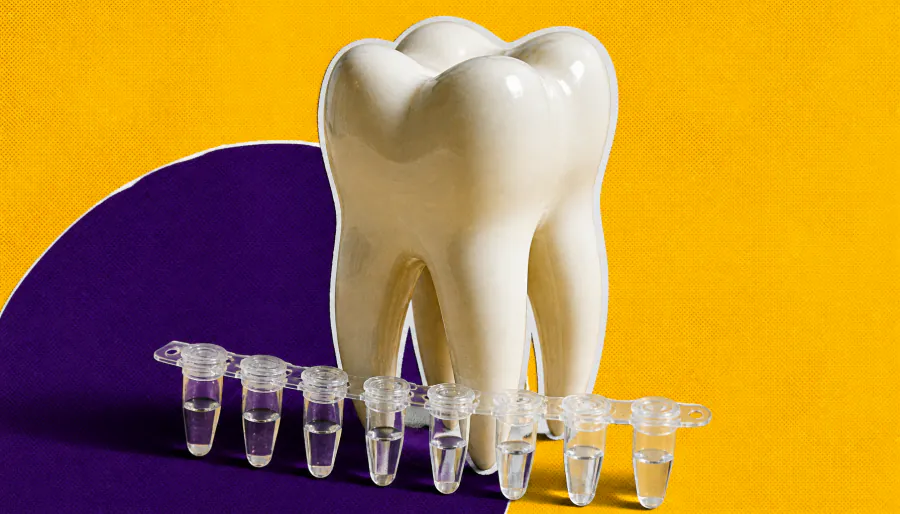
In hypophosphatasia (HPP), a rare inherited bone disorder, early tooth loss is often the first red flag — but why dental symptoms vary so widely between patients has been a mystery. Researchers at the University of Osaka created new mouse models mimicking specific ALPL gene variants found in patients, revealing that the particular variant, not just enzyme levels, shapes how and how severely teeth are affected.
Hypophosphatasia (HPP) is a rare inherited condition caused by mutations in the ALPL gene that weakens bones and teeth — and for some patients, premature tooth loss is the only obvious symptom. But why dental problems vary so dramatically from person to person has long puzzled researchers. A new study from the University of Osaka sheds light on this mystery by developing mouse models that replicate specific ALPL gene variants seen in human patients.
The team studied two models representing milder disease forms. Both showed reduced bone density around the teeth and weaker tooth-anchoring tissues. One model (p.R184W) had almost no skeletal changes elsewhere but showed clear abnormalities in dentin, cementum, and tooth-supporting structures. The other (c.1559delT and p.F327L) displayed mild skeletal changes alongside broader dental defects, including reduced enamel and dentin mineralization.
Key Takeaways:
Why it matters: Since dental symptoms can precede obvious bone disease, this research highlights a critical window for earlier HPP diagnosis — and opens the door to personalized, variant-specific dental care strategies.