Curie Brief
Turn on cookies to sign in
Signing in saves your progress to your Curie account. We can only do that with cookies on — turn them on to continue.
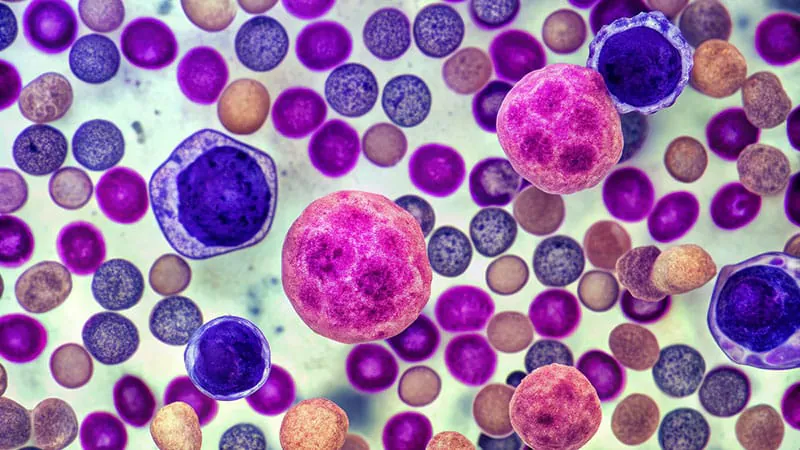
A phase 3 trial showed that swapping bortezomib for iberdomide in a daratumumab-based regimen can dramatically improve deep responses in relapsed/refractory multiple myeloma. The EXCALIBER-RRMM trial found that iberdomide + daratumumab + dexamethasone (IberDd) doubled MRD-negative complete response rates compared to the standard DVd regimen — and the FDA has already granted accelerated approval based on these findings. The trade-off: significantly higher rates of severe neutropenia and infections.
A landmark phase 3 trial is reshaping how we treat relapsed/refractory multiple myeloma (RRMM). The EXCALIBER-RRMM trial found that iberdomide (Zenbexus) combined with daratumumab and dexamethasone (IberDd) nearly doubled the rate of MRD-negative complete response compared to the standard daratumumab, bortezomib, and dexamethasone (DVd) regimen — a finding significant enough to earn FDA accelerated approval in August 2026.
The trial enrolled adults with RRMM who had received 1–2 prior lines of therapy. At a median follow-up of 15.7 months, IberDd outperformed DVd across multiple efficacy measures, including in patients with lenalidomide-refractory disease — a notoriously hard-to-treat population. However, the regimen came with a notable safety trade-off, particularly around blood counts and infections.
By the Numbers:
Why it matters: MRD-negative complete response is now an FDA-endorsed surrogate endpoint for long-term benefit, meaning these results could fast-track access to a more effective treatment for RRMM patients — especially those who've already exhausted lenalidomide-based options. PFS data are still pending.