Curie Brief
Turn on cookies to sign in
Signing in saves your progress to your Curie account. We can only do that with cookies on — turn them on to continue.
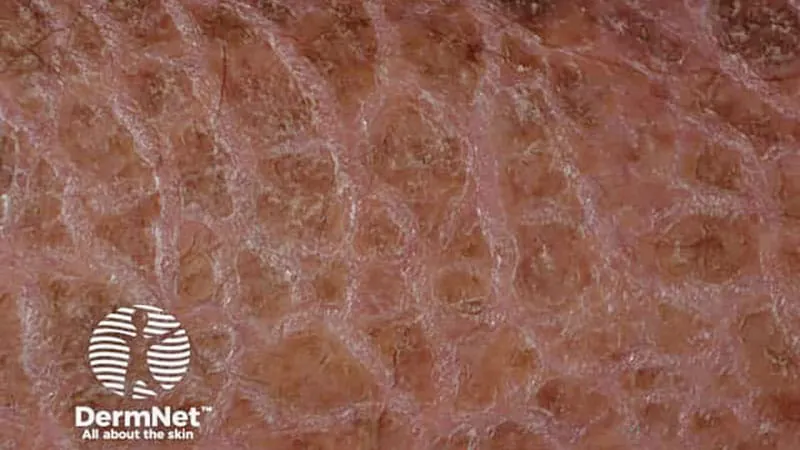
People with congenital ichthyosis face a much higher risk of allergic diseases than the general population, a new survey finds. The cross-sectional study of 115 patients found over 68% had at least one physician-diagnosed atopic condition — including food allergy, allergic rhinitis, or asthma — likely driven by severe skin barrier dysfunction. Researchers say clinicians should routinely screen these patients for hidden allergies.
A new cross-sectional survey published in The Journal of Allergy and Clinical Immunology reveals that patients with congenital ichthyosis — a group of rare inherited skin disorders — face dramatically elevated rates of allergic disease compared to the general population. Of 115 patients and caregivers surveyed, 68.2% reported at least one physician-diagnosed atopic condition, including allergic rhinitis, food allergy, or allergic asthma. Researchers believe the culprit is severe epidermal barrier dysfunction, which in many ichthyosis subtypes is equal to or worse than that seen in atopic dermatitis.
Previously, only Netherton syndrome was recognized as a congenital ichthyosis subtype associated with allergies. This study broadens that picture considerably, finding elevated atopy rates across all subtypes studied — with the highest rates in ichthyosis with confetti (100%), X-linked ichthyosis (85.7%), and harlequin ichthyosis (83.3%). Lead researcher Dr. Amy Paller noted that even X-linked ichthyosis, which has comparatively less skin inflammation, showed surprisingly high allergy rates.
By the Numbers:
Why it matters: Dermatologists treating congenital ichthyosis may be missing co-existing allergic conditions that patients don't think to mention. Proactive screening — and timely referral to allergists — could meaningfully improve quality of life for this underserved population.