Curie Brief
Turn on cookies to sign in
Signing in saves your progress to your Curie account. We can only do that with cookies on — turn them on to continue.
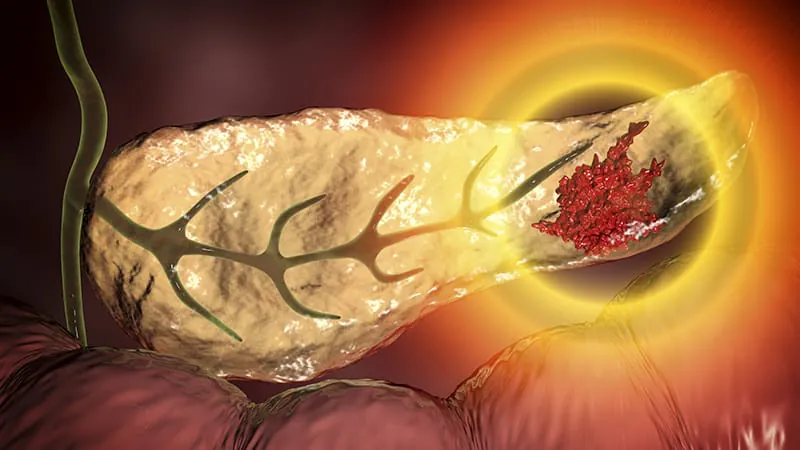
A Spanish company's AI tool is turning routine CT scans into early-detection opportunities for pancreatic lesions. Sycai Medical's algorithm can flag lesions that radiologists might otherwise miss, now boasting a sensitivity of 96.6% and specificity of 84.5%. The tool received EU medical device certification in 2024 — a first for pancreatic AI diagnostics.
Pancreatic cancer is notoriously hard to catch early — it's often symptom-free in its initial stages and tucked deep in the abdomen. Spanish company Sycai Medical is tackling this head-on with an AI algorithm that analyzes routine CT scans for pancreatic lesions that might otherwise slip past radiologists. The idea is elegant: repurpose imaging already being done for other reasons to double as a pancreatic screening opportunity.
The technology has come a long way since its 2023 debut. The original model — an artificial neural network called Attention Gate U-Net — achieved 93.1% sensitivity and 81.8% specificity in detecting pancreatic cystic lesions. By 2024, Sycai had earned the European Conformity (CE) mark under EU Medical Device Regulation, becoming the first AI solution certified for improving pancreatic lesion diagnosis.
Why it matters: Pancreatic cancer has one of the lowest survival rates of any cancer, largely because it's rarely caught early. An AI tool that can piggyback on existing imaging to flag suspicious lesions — without adding extra tests or costs — could meaningfully shift outcomes for patients.