Curie Brief
Turn on cookies to sign in
Signing in saves your progress to your Curie account. We can only do that with cookies on — turn them on to continue.
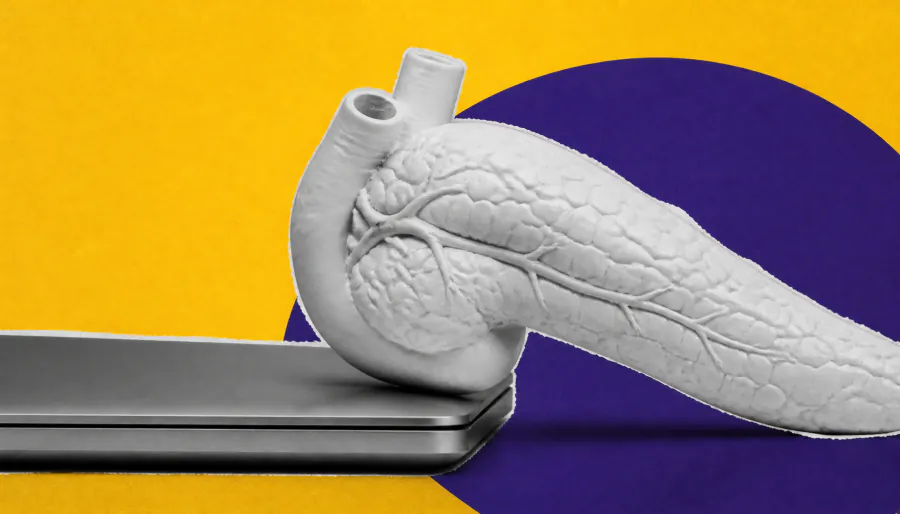
A transformer-based AI model developed at Mayo Clinic can predict an individual's pancreatic cancer risk up to 5 years before diagnosis with impressive accuracy. Trained on over 42,000 patient records, the model achieved an 88% positive predictive value at a high-risk screening threshold. Researchers say it's designed to be scalable and deployable in virtually any clinical setting.
Pancreatic cancer is notoriously difficult to catch early — but a new AI model from Mayo Clinic could change that. Researchers trained a transformer-based neural network on coded diagnostic histories from more than 42,000 individuals to predict personalized pancreatic cancer risk up to 5 years before diagnosis. The findings were presented at the American College of Surgeons annual meeting in Washington, DC.
The model works by feeding at least one year of a patient's clinical history into a custom neural network with a multihead attention mechanism — the same architecture behind many modern language models. It was designed to be generalizable and easy to implement across different healthcare settings, with lead researcher Dr. Chris Varghese noting it "could be used in almost any setting" if validated further.
By the Numbers:
Why it matters: Pancreatic cancer has one of the lowest survival rates of any cancer, largely because it's rarely caught early. An AI tool that can flag high-risk patients years in advance could enable targeted screening and earlier intervention — potentially saving lives at scale.