Curie Brief
Turn on cookies to sign in
Signing in saves your progress to your Curie account. We can only do that with cookies on — turn them on to continue.
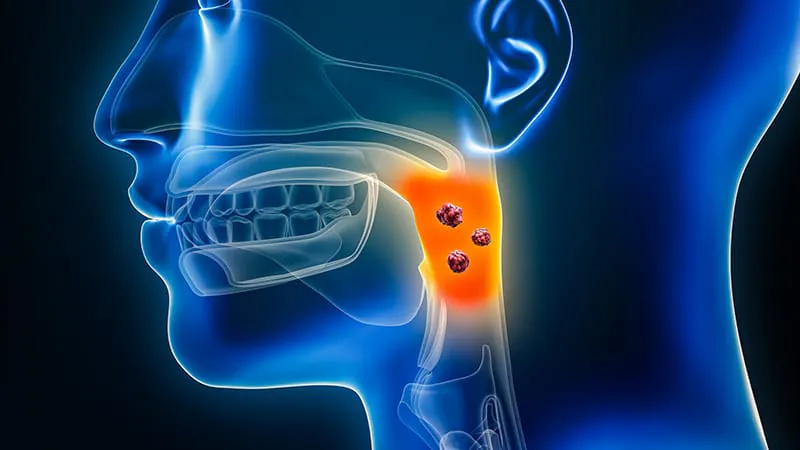
For patients with HPV-related oropharyngeal cancer who responded well to initial chemotherapy, cutting radiation dose significantly reduced swallowing difficulties and voice problems. The phase 2 E1308 trial found that 54 Gy of IMRT outperformed the standard 69.3 Gy on patient-reported outcomes. Disease-specific tools were key to capturing these quality-of-life gains.
Good news for patients with HPV-positive oropharyngeal cancer: a phase 2 trial shows that reducing radiation dose after a strong response to induction chemotherapy meaningfully cuts treatment-related side effects. The ECOG-ACRIN E1308 trial compared reduced-dose IMRT (54 Gy) against standard-dose IMRT (69.3 Gy) in patients who achieved a complete clinical response to induction chemotherapy. Of 80 enrolled patients, 78% hit that complete-response mark and received the lower dose.
At 6 months post-treatment, patients on the reduced-dose regimen reported significantly less trouble swallowing solids and liquids, less voice impairment, less dry mouth, and fewer neck/shoulder movement limitations. A historical comparison with an older trial using 3D conformal radiation at 70 Gy also showed IMRT's edge — with lower rates of oral mucositis, dysphagia, and esophagitis.
Key Takeaways:
Why it matters: HPV-related oropharyngeal cancers are increasingly common and highly curable — meaning patients live long enough to feel the lasting burden of aggressive treatment. This trial offers evidence that a response-guided, lower-dose approach can preserve quality of life, paving the way for more personalized cancer care.