Curie Brief
Turn on cookies to sign in
Signing in saves your progress to your Curie account. We can only do that with cookies on — turn them on to continue.
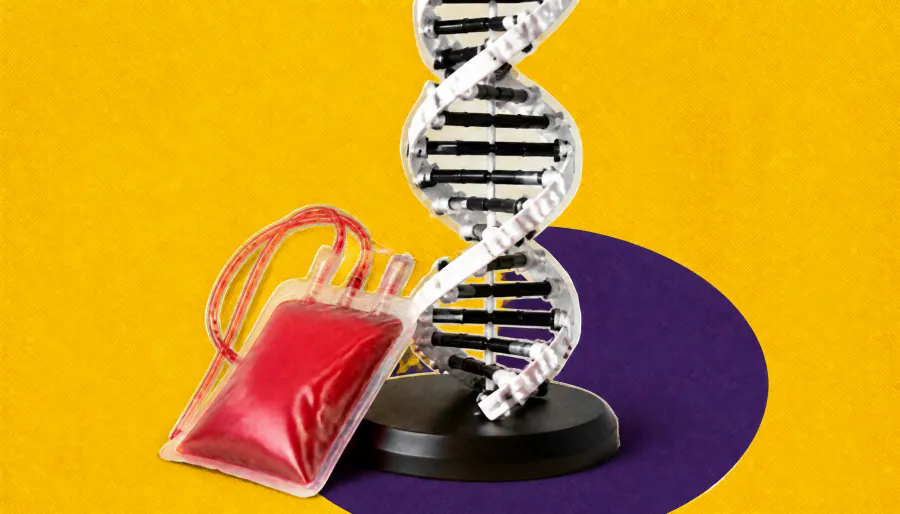
Dana-Farber researchers have discovered a new molecular pathway — involving BACH2 and NRF2 — that regulates fetal hemoglobin production in blood disorders. By reducing BACH2, the NRF2 protein can switch fetal hemoglobin genes back on, offering a potential new drug or gene-editing target for sickle cell disease and beta thalassemia. The finding builds on two decades of genetics research that previously led to the gene therapy Casgevy.
Scientists at Dana-Farber Cancer Institute have identified a promising new biological pathway that could lead to better treatments for sickle cell disease and beta thalassemia. Using a large genome-wide association study spanning multiple ancestries — including European, African, and Asian populations — researchers pinpointed the BACH2-NRF2 pathway as a key regulator of fetal hemoglobin, the "backup" form of hemoglobin that can compensate for the defective adult version in these disorders.
Here's how it works: BACH2 normally acts as a brake on fetal hemoglobin production. When BACH2 is inhibited, NRF2 steps in to activate fetal hemoglobin genes. Importantly, lab studies showed that pharmacological inhibition of BACH2 successfully increased fetal hemoglobin in human red blood cell precursors — a meaningful proof-of-concept.
Key Takeaways:
Why it matters: Current gene therapies like Casgevy work by targeting BCL11A, but this new pathway opens an entirely separate avenue for drug-based or gene-editing treatments — potentially expanding options for the millions of patients worldwide living with these debilitating blood disorders.