Curie Brief
Turn on cookies to sign in
Signing in saves your progress to your Curie account. We can only do that with cookies on — turn them on to continue.
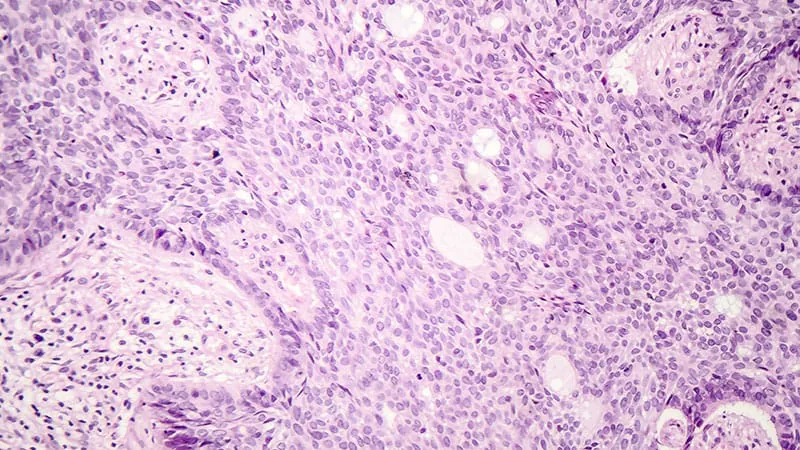
A phase 2b trial found that three injections of an experimental RNA immunotherapy, BO-112, eliminated visible and viable tumor in 56% of high-risk basal cell carcinoma (BCC) patients at 24 weeks. The treatment works by unmasking tumor cells to trigger an immune attack. While promising, some experts say surgery still holds the edge in reliability and speed.
A new nonsurgical option for basal cell carcinoma (BCC) is generating interest. The SPOTLIGHT-204 phase 2b trial found that three intralesional injections of BO-112 — a synthetic double-stranded RNA nanoparticle — achieved complete pathologic and visual responses in 56% of high-risk BCC patients at 24 weeks. Among those with high-risk facial lesions, the rate climbed to 62%. Across the broader efficacy population, 61% met the primary endpoint of no visible tumor growth and ≤50% viable tumor on pathology.
BO-112 works by unmasking tumor cells that typically evade immune surveillance, triggering a cytotoxic CD8+ T-cell response that destroys the cancer. The safety profile was reassuring — no serious adverse events were reported, 91% of reactions were grade 1, and most resolved within 3 days.
By the Numbers:
Why it matters: Surgery remains the gold standard for BCC, with ~95–96% efficacy. But for patients with extensive scarring, genetic syndromes causing multiple tumors, or surgical contraindications, a well-tolerated injectable immunotherapy could be a meaningful alternative — if larger trials confirm these early results.