Curie Brief
Turn on cookies to sign in
Signing in saves your progress to your Curie account. We can only do that with cookies on — turn them on to continue.
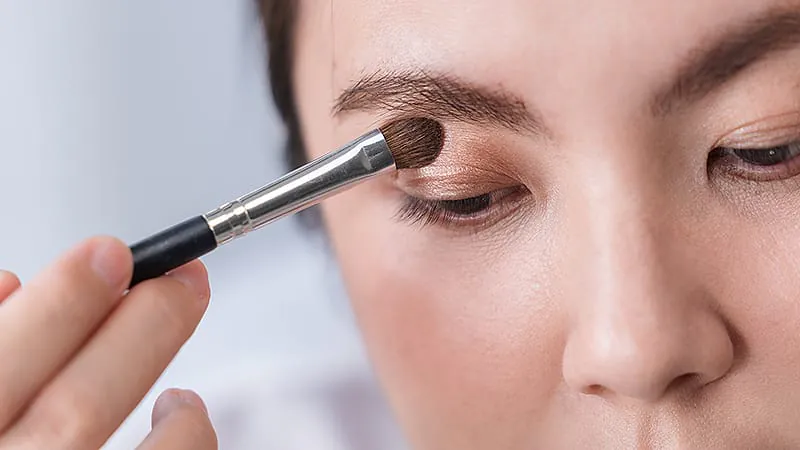
PFAS through the skin: a hidden exposure route. While most concerns about forever chemicals focus on food and water, emerging research shows PFAS in cosmetics, clothing, and household dust can be absorbed through the skin and enter the bloodstream. Experts warn this underappreciated route may accumulate meaningfully over a lifetime — especially for people with compromised skin barriers or young children.
Most conversations about PFAS (per- and polyfluoroalkyl substances, aka "forever chemicals") center on contaminated water and food — but researchers are increasingly flagging the skin as a significant, underappreciated exposure route. Products like cosmetics, sunscreen, waterproof clothing, and even school uniforms can contain high levels of PFAS, and studies show these chemicals can penetrate the skin and accumulate in the bloodstream over time.
In one striking self-experiment, a German researcher applied PFOA-containing sunscreen once and tracked his blood levels for weeks — the chemical peaked on day 22, accounting for over 9% of his total blood PFAS. Daily cosmetic use could amplify this effect considerably. Household dust from PFAS-containing carpets and furniture adds yet another skin-contact pathway, with toddlers at particular risk due to their higher skin-surface-to-body-weight ratio.
By the Numbers:
Why it matters: Dermal PFAS exposure is largely invisible to consumers and clinicians alike. For patients with eczema, psoriasis, or other skin barrier conditions, the risk may be even higher. Experts urge label-checking, choosing PFAS-free products where possible, and advocating for stronger regulation — because what goes on your skin doesn't just stay there.