Curie Brief
Turn on cookies to sign in
Signing in saves your progress to your Curie account. We can only do that with cookies on — turn them on to continue.
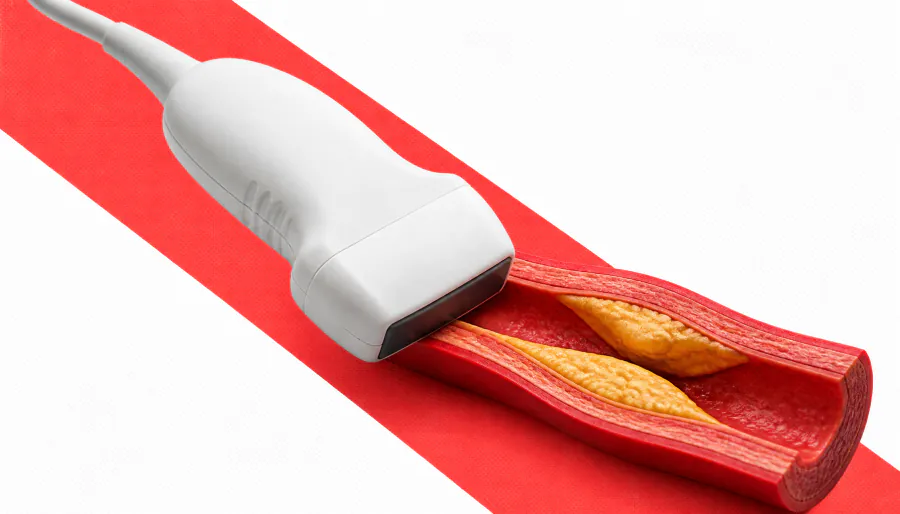
A massive international study found that more than half of 16,000 apparently healthy adults already had atherosclerosis — and about 1 in 13 people aged 18–29 weren't spared. The REACT study, published in the New England Journal of Medicine, suggests that directly imaging arteries could detect hidden cardiovascular disease decades before symptoms strike, potentially reshaping how we approach heart disease prevention.
Atherosclerosis — the slow, silent buildup of plaque inside arteries that drives most heart attacks and strokes — isn't just a middle-age problem. A landmark international study called REACT scanned the arteries of 16,808 apparently healthy adults aged 18–70 in Denmark and Spain, and found that 57.1% already had detectable plaque. Even more striking: roughly 1 in 13 people in their 20s showed signs of the disease.
The study, published in the New England Journal of Medicine and presented at ESC Congress 2026, challenges the traditional approach of estimating cardiovascular risk using indirect markers like cholesterol and blood pressure. Instead, researchers propose directly imaging arteries — including with portable ultrasound — to catch disease before it causes harm. Crucially, most people with coronary artery plaque also had plaque in their carotid or femoral arteries, meaning a quick, non-invasive ultrasound scan could serve as a practical screening tool.
By the Numbers:
Why it matters: Current risk scores miss a large share of people who already have silent disease. If imaging-guided prevention proves effective in REACT's Phase 2 (planned 2027–2032), it could fundamentally shift how — and how early — we intervene to prevent heart attacks and strokes.