Curie Brief
Turn on cookies to sign in
Signing in saves your progress to your Curie account. We can only do that with cookies on — turn them on to continue.
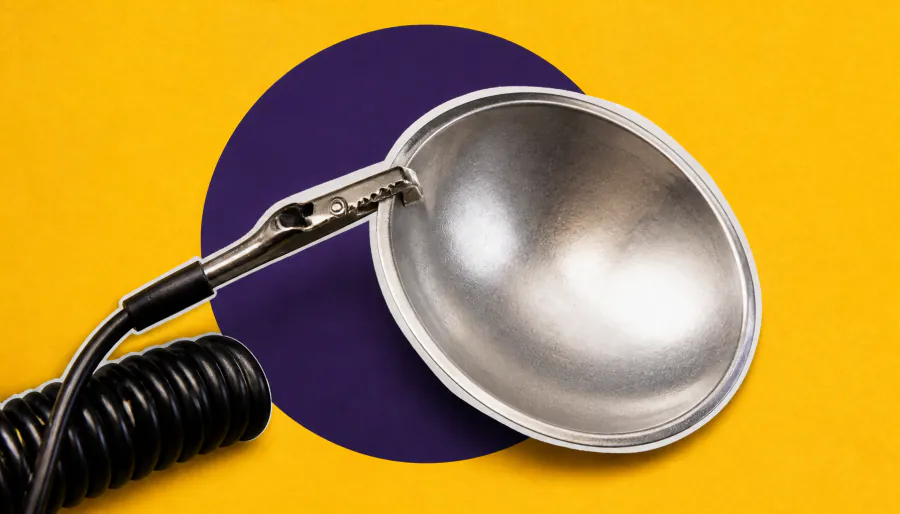
Could electricity replace the laser in vision correction? Researchers are testing electromechanical reshaping (EMR), a technique that uses a small electric current and a platinum "contact lens" mold to reshape the cornea in about a minute — no cuts, no lasers required. Early experiments on rabbit eye tissue successfully corrected simulated nearsightedness in every tested eye, though human trials are still a long way off.
Could electricity replace the laser in vision correction? Researchers at Occidental College and UC Irvine are developing a technique called electromechanical reshaping (EMR) that temporarily softens the cornea using a small electric current, allowing it to be molded into a new shape — no incisions, no lasers, no tissue removal needed. A specially designed platinum "contact lens" acts as both the mold and the electrode, reshaping the cornea in roughly one minute.
The key mechanism: applying an electric potential lowers the cornea's pH, temporarily weakening the collagen bonds that keep it rigid. Once the pH normalizes, the tissue holds its new shape. Early experiments on rabbit eyeballs showed the method corrected simulated nearsightedness in every treated eye — and cell survival was maintained throughout.
By the Numbers
Why it matters: LASIK permanently removes corneal tissue and carries real risks. EMR could offer a cheaper, potentially reversible alternative — but researchers caution it's still in early-stage animal testing, with a long road ahead before clinical use.