Curie Brief
Turn on cookies to sign in
Signing in saves your progress to your Curie account. We can only do that with cookies on — turn them on to continue.
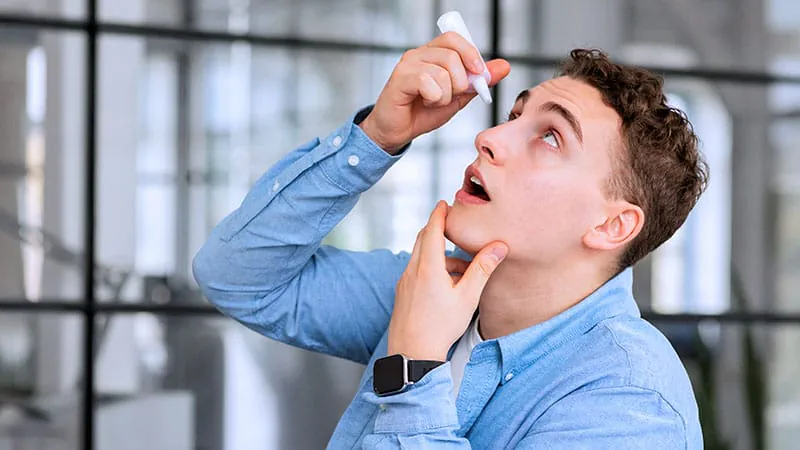
An investigational eye drop called reproxalap is showing real promise for dry eye disease, with patients reporting meaningful symptom relief as early as the first week of treatment. A pooled analysis of two clinical trials found reproxalap outperformed a vehicle drop on both dryness and discomfort scores over 12 weeks. The main side effect? Mild irritation at the drop site, affecting about half of reproxalap users.
An investigational eye drop, reproxalap (0.25%), is generating interest in ophthalmology after a pooled analysis of two clinical trials showed it significantly outperformed a vehicle drop in relieving dry eye symptoms — and did so quickly. Patients reported meaningful reductions in dryness and discomfort scores as early as week 1, with benefits sustained all the way through week 12.
The analysis pooled data from a phase 2 trial and two arms of a phase 3 trial, enrolling 335 participants (mean age 64.2 years; ~75% women) with moderate-to-severe dry eye disease. Participants used drops four times daily for the first 4 weeks, then twice daily for the remaining 8 weeks.
By the Numbers:
Why it matters: Dry eye disease is one of the most common — and undertreated — conditions in ophthalmology. A fast-acting, well-tolerated option like reproxalap could meaningfully expand the treatment toolkit for clinicians and improve quality of life for millions of patients.