Curie Brief
Turn on cookies to sign in
Signing in saves your progress to your Curie account. We can only do that with cookies on — turn them on to continue.
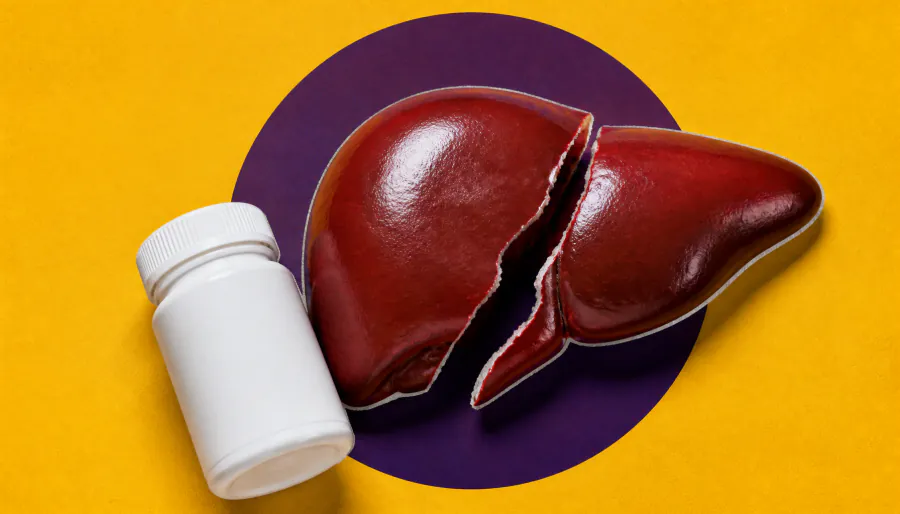
Liver injuries from external substances have nearly quadrupled over the past 25 years — and acetaminophen is the biggest culprit. A retrospective study of 220,160 cases found that medication-related exposures, especially single-ingredient acetaminophen, drove most of the surge. While regulatory changes in the early 2010s curbed combo-product harms, solo acetaminophen injuries kept climbing sharply.
Liver injuries caused by xenobiotics — external substances like medications, alcohol, and toxins — have surged nearly fourfold in the U.S. over the past 25 years, with acetaminophen emerging as the dominant driver. A retrospective analysis of the National Poison Data System covering 220,160 cases from 2000 to 2024 found that population-adjusted rates jumped from 10.9 to 52.9 cases per million — far outpacing the 35% overall rise in poison center cases during the same period.
Medications accounted for 85–94% of exposures, with acetaminophen alone implicated in 33% of male and 45% of female cases. Suspected suicide was the most common reason for exposure, cited in nearly half of male cases and over half of female cases. Regulatory actions in the early 2010s — including stronger FDA labeling and limits on acetaminophen-opioid combo products — did reduce combo-product liver injuries by 60–85%, but single-ingredient acetaminophen exposures surged by 349% in men and 380% in women.
Why it matters: Acetaminophen is one of the most widely used OTC medications, and its role in serious liver injury is growing — not shrinking. Researchers are now calling for additional safeguards, such as pack-size restrictions or limits on non-pharmacy sales, to curb the rising toll of single-ingredient acetaminophen toxicity.