Curie Brief
Turn on cookies to sign in
Signing in saves your progress to your Curie account. We can only do that with cookies on — turn them on to continue.
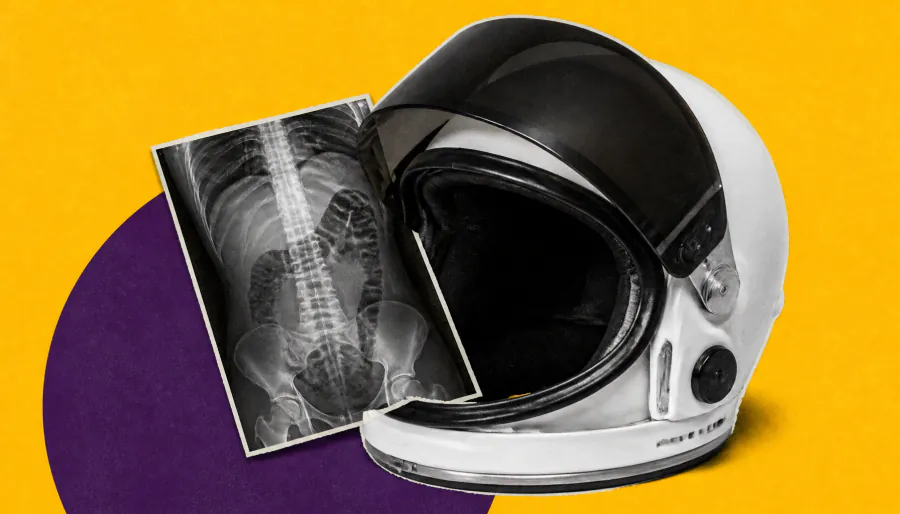
Astronauts' gut bacteria shift dramatically within weeks of entering space, a new NASA-backed study finds. Microgravity appears to slow food movement through the intestines, triggering increased protein fermentation by gut bacteria — a likely culprit behind astronaut constipation. The insights could also benefit bedridden patients who experience similar digestive disruptions.
A new study from the University of Copenhagen, conducted in collaboration with NASA, sheds light on why astronauts so commonly experience constipation in space. By analyzing blood samples from 52 astronauts across multiple International Space Station missions, researchers found that gut bacteria begin fermenting protein at higher-than-normal rates within weeks of entering microgravity — and the change persists until astronauts return to Earth.
The leading theory: microgravity slows the movement of food through the digestive tract. When food lingers longer in the intestines, gut bacteria exhaust available fiber and turn to protein as a fuel source instead. The byproducts of this protein fermentation — metabolites that enter the bloodstream — have been linked to kidney damage, mood changes, and reduced concentration, raising health concerns that extend well beyond digestive discomfort.
Key Takeaways:
Why it matters: With missions to the Moon and Mars on the horizon, understanding and mitigating gut health disruptions in astronauts is increasingly urgent. But the science doesn't stop at the stratosphere — these findings could reshape how clinicians manage digestive health in immobile or bedridden patients right here on Earth.