Curie Brief
Turn on cookies to sign in
Signing in saves your progress to your Curie account. We can only do that with cookies on — turn them on to continue.
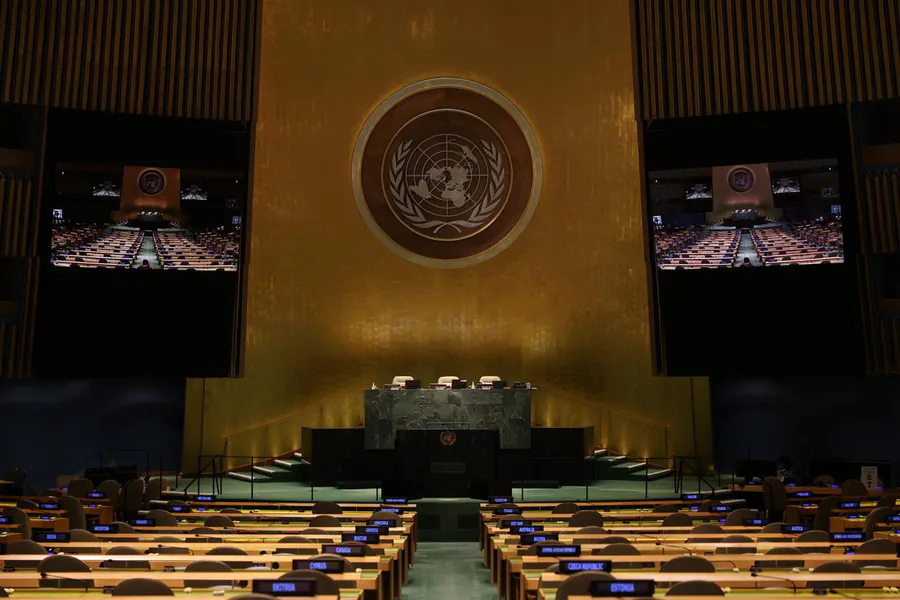
The US and EU threw a wrench into global pandemic planning by objecting to a UN declaration meant to strengthen international pandemic preparedness. Their pushback prevented member states from formally endorsing the WHO Pandemic Agreement at the UN's High-Level Meeting. The declaration is now expected to be revisited at a future UN General Assembly session.
Global pandemic preparedness efforts hit a wall this week when the United States and European Union objected to a UN political declaration that would have formally recognized the WHO Pandemic Agreement — a landmark pact adopted by the World Health Assembly in May 2025 after years of negotiation. The declaration was meant to be endorsed at the UN's second High-Level Meeting on pandemic prevention, preparedness, and response (PPPR), but the objections left member states unable to reach consensus.
The US, represented by CDC Director Dr. Erica Schwartz, cited unresolved issues including "divisive ideologies" and concerns over the unfinished Pathogen Access and Benefit-Sharing (PABS) System — a mechanism designed to enable timely sharing of pandemic-potential pathogens for rapid vaccine and treatment development. The EU echoed concerns, particularly around technology transfer, insisting it must remain voluntary and on mutually agreed terms.
Key Takeaways:
Why it matters: Without broad political consensus, the global framework for responding to the next pandemic remains fragile — raising real questions about whether the world is meaningfully better prepared than it was before COVID-19.