Curie Brief
Turn on cookies to sign in
Signing in saves your progress to your Curie account. We can only do that with cookies on — turn them on to continue.
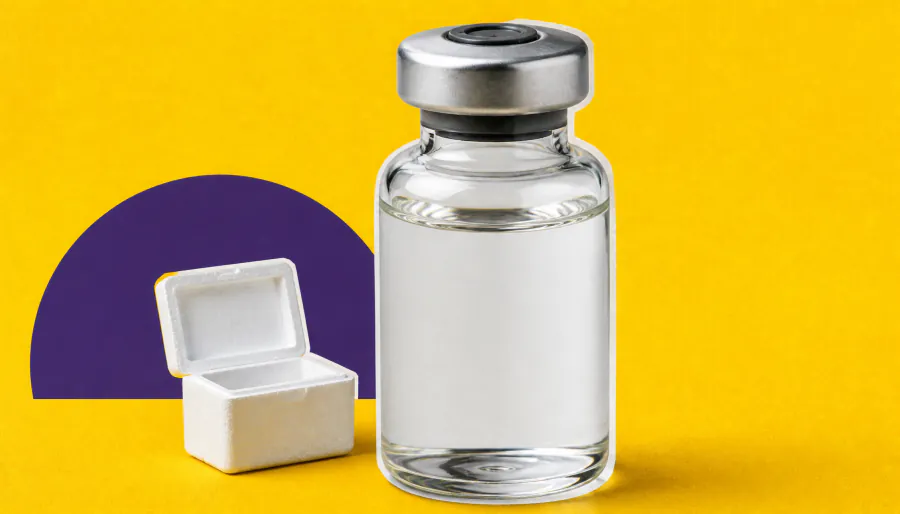
MIT engineers used an AI algorithm to reformulate lipid nanoparticles (LNPs) in mRNA vaccines, making them stable at room temperature for up to a year — no freezer required. The AI-guided approach slashed development time from months to weeks and produced immune responses in mice equivalent to standard Moderna-like vaccines. This could be a game-changer for global vaccine access.
One of the biggest challenges with mRNA vaccines — like Moderna and Pfizer's COVID-19 shots — is that they require ultra-cold storage, sometimes as low as -80°C, making distribution to low-resource regions a significant logistical hurdle. MIT engineers may have found a solution, using an AI algorithm to redesign the lipid nanoparticles (LNPs) that carry mRNA vaccines so they can remain stable without refrigeration.
The AI, developed in collaboration with MIT's CSAIL lab, analyzed nearly 50 FDA-approved excipients — stabilizing additives like sugars, salts, and polymers — and rapidly predicted optimal combinations to keep LNPs stable at elevated temperatures. What previously took months of trial-and-error was accomplished in just a few weeks. The resulting vaccines, including a solid microneedle patch version, generated immune responses in mice equivalent to standard injectable mRNA vaccines, even after prolonged heat exposure.
By the Numbers:
Why it matters: Eliminating the cold-chain requirement for mRNA vaccines could dramatically expand access in low- and middle-income countries, accelerate vaccine rollout during outbreaks, and open the door to novel delivery methods like microneedle patches — all while building on existing FDA-approved components.