Curie Brief
Turn on cookies to sign in
Signing in saves your progress to your Curie account. We can only do that with cookies on — turn them on to continue.
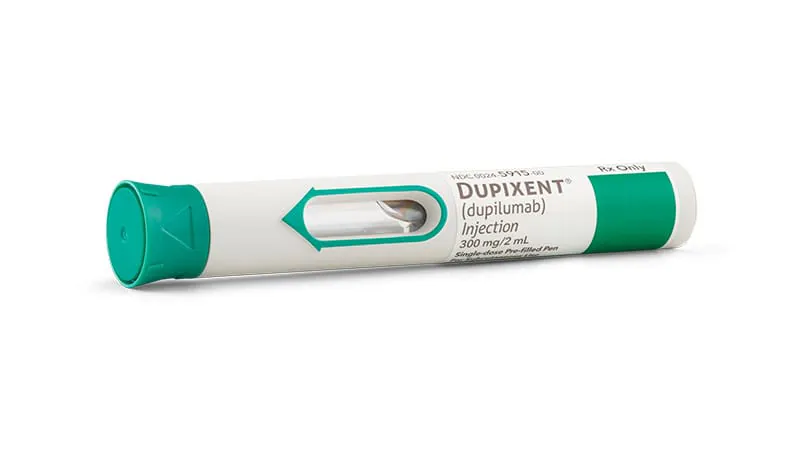
Dupilumab helps kids with eczema, but age matters. A new JAMA Dermatology study found that while the biologic significantly improved skin severity across all pediatric age groups, children under 6 saw smaller quality-of-life gains and were more likely to stop treatment than older kids and teens. Over 80% of patients stayed on therapy after 3 years.
A new real-world study published in JAMA Dermatology tracked 309 children (ages 6 months to 16 years) on dupilumab (Dupixent) for up to 3 years and found that while the biologic consistently improved eczema severity across all age groups, the youngest patients — those under 6 — got significantly less quality-of-life benefit than older children and teens.
Eczema severity scores dropped dramatically overall (from 16.3 at baseline to 3.4 after 3 years), and more than 80% of patients remained on therapy. But younger kids reported more persistent itching and skin irritation, and were nearly twice as likely to discontinue treatment due to injection-related issues (6.9% vs. 3.8% in older children).
By the Numbers:
Why it matters: Atopic dermatitis affects up to 20% of children, with most developing symptoms before age 5. These findings highlight that age-specific expectations and monitoring strategies — especially around eye health and injection tolerance — are key to optimizing dupilumab therapy in pediatric patients.