Curie Brief
Turn on cookies to sign in
Signing in saves your progress to your Curie account. We can only do that with cookies on — turn them on to continue.
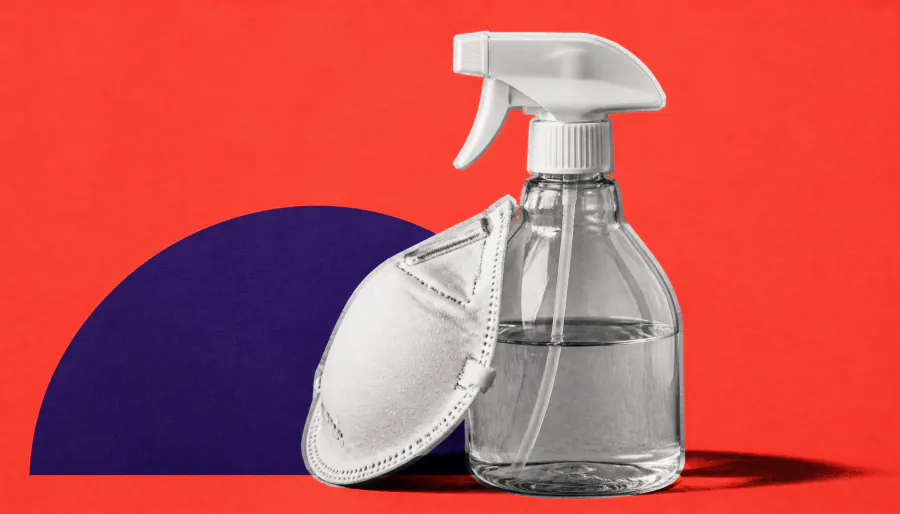
That citrus-fresh scent after cleaning? It could be a sign of invisible air pollution. Purdue University researchers found that scented cleaning products react with indoor ozone to generate billions or trillions of nanoparticles within minutes — particles small enough to penetrate deep into the lungs. The good news: simple steps like choosing fragrance-free products and opening windows can significantly cut your exposure.
That satisfying citrus or lavender scent after scrubbing your kitchen? It may actually signal a hidden air quality problem. Researchers at Purdue University found that fragrance compounds — like limonene, pinene, and linalool — released by both conventional and botanical cleaning products can react with indoor ozone to rapidly generate nanoparticles. These particles form within minutes of cleaning and are so tiny (1–30 nanometers) that standard home air quality monitors can't even detect them.
The concern isn't just the particles themselves — it's the dose. Researchers found that routine cleaning tasks like mopping or wiping countertops can temporarily push ultrafine particle levels above outdoor concentrations, with an inhaled dose comparable to standing next to heavy traffic. Using germicidal UV-C lamps alongside scented products makes things worse, as the lamps produce additional ozone that intensifies particle formation.
By the Numbers
Why it matters: Most people associate a fresh scent with a clean, healthy space — but this research challenges that assumption. Clinicians advising patients on respiratory health or asthma management should be aware of this underrecognized exposure source and counsel patients to use fragrance-free products and improve ventilation during cleaning.