Curie Brief
Turn on cookies to sign in
Signing in saves your progress to your Curie account. We can only do that with cookies on — turn them on to continue.
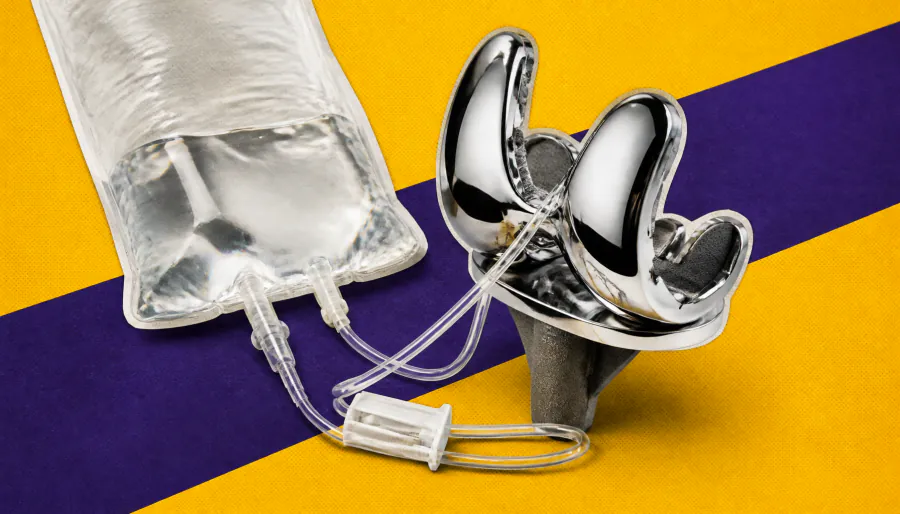
A new surgical approach for chronic periprosthetic joint infection (PJI) is turning heads. Rapid exchange arthroplasty achieved just a 10% failure rate compared to 60% with the traditional two-stage exchange. The technique uses high-dose local antibiotics to tackle antibiotic-resistant biofilm — and could reshape how orthopedic infections are treated.
A new surgical approach for chronic periprosthetic joint infection (PJI) is showing striking results. Researchers at the University of Pittsburgh Medical Center compared rapid exchange arthroplasty — a novel technique combining elements of single- and two-stage procedures — against historical controls who underwent the standard two-stage exchange. At 24 months, the rapid exchange group fared dramatically better.
The key to the approach lies in aggressive local antibiotic delivery: patients received intra-articular cyclic irrigation with tobramycin daily for 7 days, followed by hourly vancomycin irrigation. This targets antibiotic-tolerant biofilm — a major culprit in persistent joint infections — that conventional systemic antibiotics often can't reach. Notably, the rapid exchange group included patients with more prior surgeries and a higher proportion of multidrug-resistant bacteria, making the results even more impressive.
By the Numbers:
Why it matters: PJI is one of the most feared complications of joint replacement surgery, and repeat two-stage exchanges carry high failure rates. Rapid exchange arthroplasty could offer a more effective, less burdensome path forward for patients with recalcitrant infections.