Curie Brief
Turn on cookies to sign in
Signing in saves your progress to your Curie account. We can only do that with cookies on — turn them on to continue.
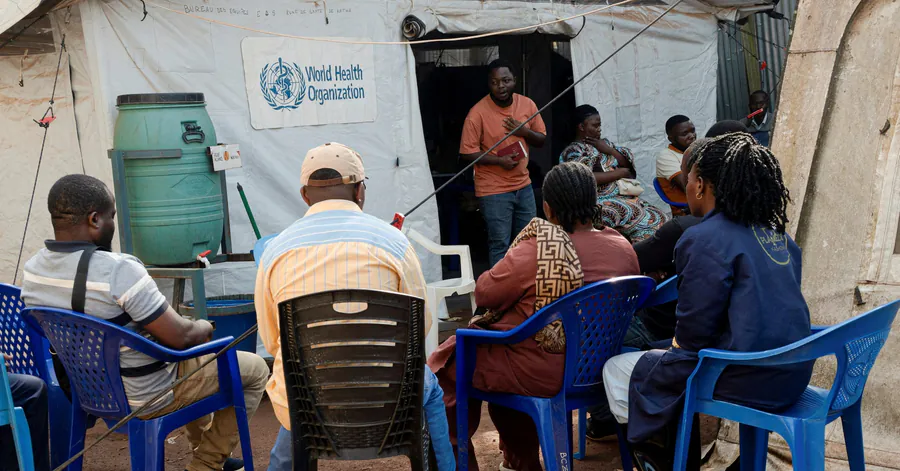
The WHO reports that Congo's Bundibugyo Ebola outbreak has spread to two new health zones, now affecting 63 zones across seven provinces. With nearly 7,900 confirmed cases and 3,800 deaths, conflict and displacement are making containment harder. The absence of approved vaccines for this strain adds another layer of complexity to the response.
The WHO confirmed that the Democratic Republic of Congo's Ebola outbreak — caused by the Bundibugyo virus strain — has expanded to two new health zones: Bulu in Sud Ubangi province and Dungu in Haut-Uele province, which borders South Sudan. The outbreak now spans 63 health zones across seven provinces.
WHO Director-General Tedros Adhanom Ghebreyesus highlighted that ongoing armed conflict and population displacement are severely limiting health workers' ability to reach affected communities and trace contacts. While overall case counts are trending downward and contact tracing and safe burials have improved, transmission remains uneven. Critically, no approved vaccines or treatments exist for the Bundibugyo strain, which may discourage people from seeking care — and the WHO is working to fast-track clinical trials.
By the Numbers:
Why it matters: The combination of a vaccine-less Ebola strain, active conflict, and cross-border spread near South Sudan raises serious containment concerns. Tedros also used the moment to call for stronger pandemic preparedness globally, warning that a future respiratory pathogen — not Ebola — poses the greatest pandemic risk.