Curie Brief
Turn on cookies to sign in
Signing in saves your progress to your Curie account. We can only do that with cookies on — turn them on to continue.
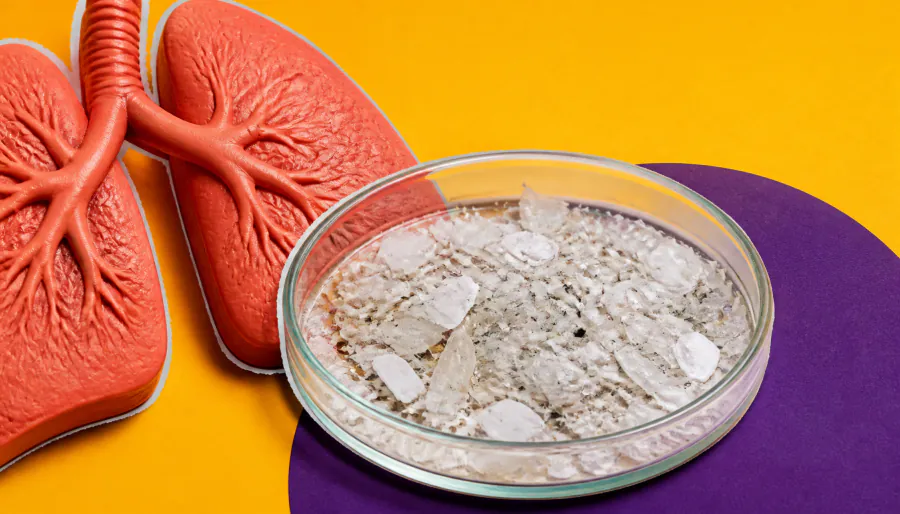
Lung cancer patients may be carrying more than just a diagnosis. A new study found that 66% of patients with lung malignancy had microplastics in their airway samples, compared to just 46% of those without cancer. Researchers stress this is early-stage, observational data — but it raises important questions about what environmental particles may be doing inside our lungs.
A new observational study presented at the European Respiratory Society International Congress found that microplastics are significantly more prevalent — and more abundant — in the airways of patients with lung cancer compared to those without. Researchers analyzed bronchoalveolar lavage (BAL) samples from 100 adults and found microplastics in over half of all patients studied.
The findings add to growing concern about environmental plastic exposure and its potential role in respiratory disease, though researchers are careful to note that causation has not been established. An adjusted model still showed an independent link between higher microplastic burden in airway samples and lung malignancy.
By the Numbers:
Why it matters: While this study doesn't change clinical practice today, it signals that environmental exposures — specifically airborne microplastics — deserve serious attention in respiratory and oncology research. Larger, longitudinal studies are now needed to determine whether microplastics are a cause, consequence, or coincidence in lung cancer.