Curie Brief
Turn on cookies to sign in
Signing in saves your progress to your Curie account. We can only do that with cookies on — turn them on to continue.
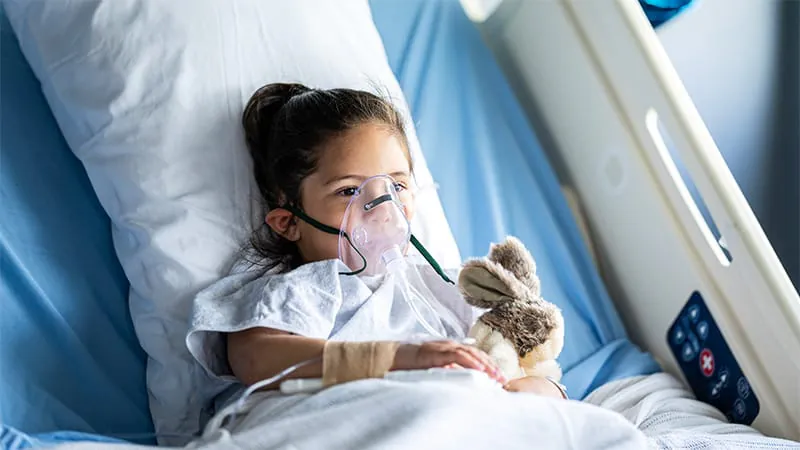
Children in England's most deprived neighbourhoods are far more likely to end up in a paediatric ICU for respiratory illness — and living near heavy smokers makes it worse. A large study found deprivation raised ICU admission rates by 73%, while high neighbourhood smoking exposure added another 26% risk. Racial disparities in both admissions and mortality were also stark.
A major UK study has found that where a child lives — and how much cigarette smoke surrounds them — dramatically shapes their risk of ending up in a paediatric intensive care unit (PICU) for a respiratory illness. Researchers analysed nearly 42,000 PICU admissions across England over nearly a decade, finding that socioeconomic deprivation and neighbourhood smoking exposure are powerful, independent drivers of critical respiratory illness in children.
Racial disparities added another troubling layer: Asian and Black children were admitted at significantly higher rates than White children, with the sharpest gaps seen in asthma-related cases. Asian children also faced roughly double the odds of dying in the PICU compared to White children.
By the Numbers:
Why it matters: These findings point to preventable deaths. Stronger tobacco control in child-heavy public spaces, better access to primary care in underserved communities, and targeted support for minority ethnic families could meaningfully reduce childhood respiratory crises and save lives.