Curie Brief
Turn on cookies to sign in
Signing in saves your progress to your Curie account. We can only do that with cookies on — turn them on to continue.
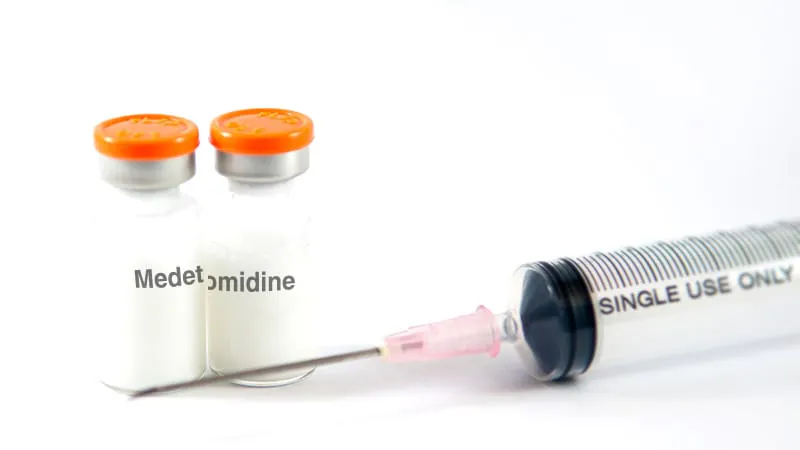
Medetomidine, a veterinary sedative nicknamed "rhino tranq," is rapidly infiltrating the illicit fentanyl supply and triggering a severe, fast-onset withdrawal syndrome that standard opioid treatments can't address. CDC reports of the drug surged 950% between 2023 and 2024, and experts are urging clinicians to update their protocols now. Patients describe the withdrawal as far worse than fentanyl — and it can become life-threatening.
Medetomidine — a veterinary sedative known on the street as "rhino tranq," "mede," or "dex" — is quietly taking over the illicit opioid supply, and clinicians are scrambling to keep up. An alpha-2 adrenergic agonist related to xylazine and clonidine, it's not approved for human use, yet it's increasingly showing up in fentanyl and heroin without users' knowledge. In Philadelphia, the share of drug samples containing medetomidine jumped from 29% to 90% between May 2024 and March 2026, while xylazine dropped sharply — suggesting medetomidine is actively displacing its predecessor.
What makes this especially concerning is the withdrawal profile. Symptoms can begin just 4–6 hours after last use and include severe hypertension, rapid heart rate, vomiting, tremors, and rigors — a picture patients describe as far worse than fentanyl withdrawal. Standard opioid withdrawal protocols fall short, and naloxone doesn't reverse medetomidine sedation. Experts recommend oral alpha-2 agonists (clonidine or guanfacine) as first-line treatment, escalating to IV dexmedetomidine for refractory cases.
By the Numbers:
Why it matters: As medetomidine spreads nationally, clinicians who rely solely on standard opioid withdrawal protocols risk missing a potentially life-threatening syndrome. Early recognition, updated institutional protocols, and proactive patient education are critical to preventing serious harm.