Curie Brief
Turn on cookies to sign in
Signing in saves your progress to your Curie account. We can only do that with cookies on — turn them on to continue.
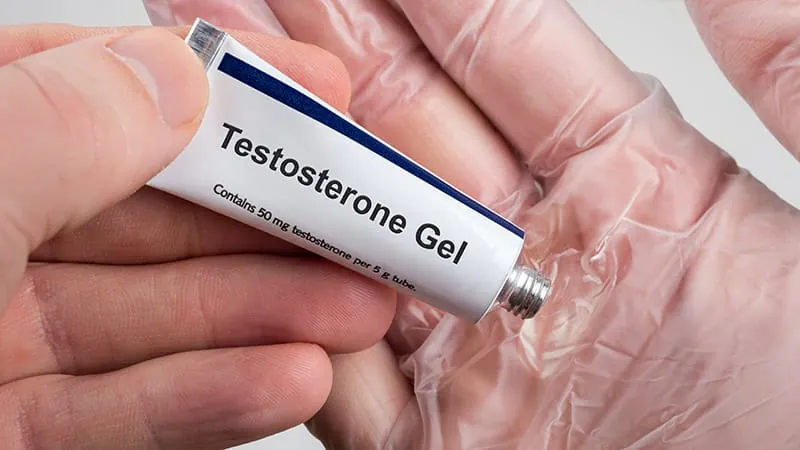
Testosterone prescriptions for women have nearly tripled in recent years, yet no FDA-approved female-specific product exists in the US. At a recent FDA public workshop, clinicians urged the agency to approve a women's formulation, citing dosing errors, insurance gaps, and pharmacy denials tied to off-label use of male products. Evidence currently supports testosterone only for postmenopausal hypoactive sexual desire disorder (HSDD), with long-term safety data still lacking.
Testosterone prescriptions for women have nearly tripled since 2023, yet the US remains without an FDA-approved female-specific product. At a recent FDA public workshop, experts called on the agency to close that gap, arguing that the absence of an approved formulation is driving dosing errors, pharmacy denials, insurance coverage gaps, and reliance on compounded products that can deliver unreliable doses.
Currently, clinicians must adapt male-approved products — like AbbVie's AndroGel — to roughly one-tenth the standard dose, or turn to compounding pharmacies. That workaround comes with real-world friction: some major pharmacy chains have begun rejecting these prescriptions, and compounded testosterone can cost significantly more than commercial alternatives. Meanwhile, the UK, Australia, New Zealand, and South Africa have already approved female-specific testosterone products.
Key Takeaways:
Why it matters: Without an FDA-approved product, women face a patchwork of access barriers while clinicians navigate off-label prescribing with limited guidance. Approval of a female-specific formulation could standardize dosing, improve insurance coverage, and enable the robust safety studies the field urgently needs.