Curie Brief
Turn on cookies to sign in
Signing in saves your progress to your Curie account. We can only do that with cookies on — turn them on to continue.
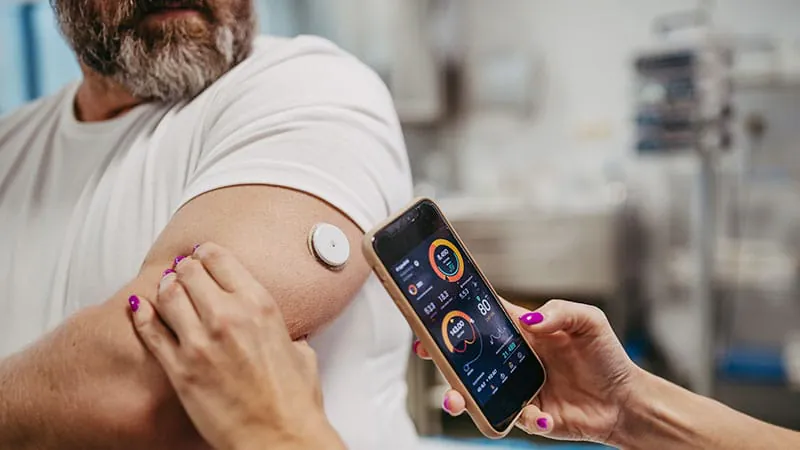
When blood sugar control slips, complications follow. A 5-year real-world study found that adults with type 1 diabetes whose CGM-derived time in range (TIR) dropped by 10+ percentage points were more than four times as likely to develop microvascular complications compared to those with stable control. Notably, CGM metrics matched A1c in predicting these complications.
A real-world Belgian study tracking 246 adults with type 1 diabetes (T1D) over five years found that those whose continuous glucose monitoring (CGM)-derived time in range (TIR) declined by at least 10 percentage points were significantly more likely to develop microvascular complications — including retinopathy, nephropathy, and peripheral neuropathy — compared to peers with stable or improving TIR.
The findings also challenge the dominance of A1c as the go-to metric: CGM-based measures like TIR and glucose management indicator (GMI) performed just as well as A1c at distinguishing patients who developed complications from those who didn't — suggesting these metrics could serve as useful complements, especially when A1c isn't available.
Why it matters: As CGM use grows, this study reinforces that tracking TIR trends over time — not just A1c — could help clinicians catch patients at risk for serious complications earlier and intervene before damage sets in.