Curie Brief
Turn on cookies to sign in
Signing in saves your progress to your Curie account. We can only do that with cookies on — turn them on to continue.
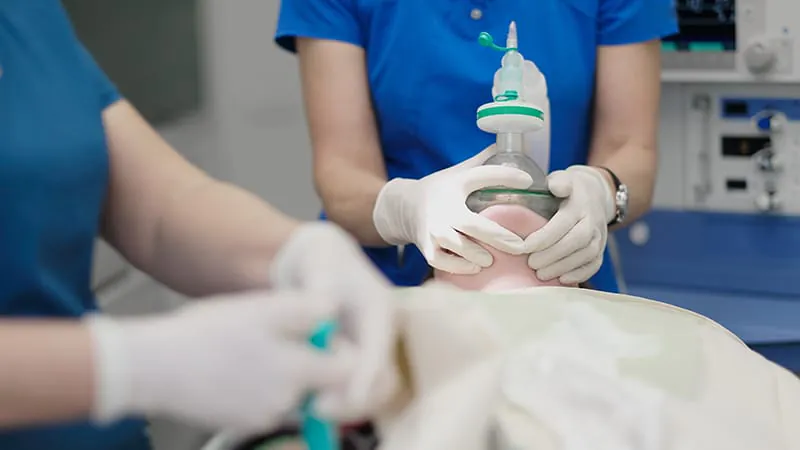
As GLP-1 medications become more common, anesthesiologists are sounding the alarm about aspiration risks during surgery — but major medical societies still can't agree on what to do about it. A large UK study found surgical patients on GLP-1s had an 11-fold higher rate of regurgitation and/or aspiration compared to those not on the drugs. With guidance ranging from "hold the drug" to "modify the diet" to "individualize risk," clinicians are left navigating a confusing patchwork of recommendations.
GLP-1 receptor agonists are everywhere — and now they're showing up in the OR with some serious implications. The GLIMPSE study, presented at the Association of Anaesthetists Annual Meeting and published in Anaesthesia, found that surgical patients on GLP-1s had an 11-fold higher rate of regurgitation and/or pulmonary aspiration compared to those not on the drugs. The study spanned 119 UK sites and over 47,000 surgical patients, making it one of the most robust datasets on this issue to date.
The catch? Not everyone agrees on what to do about it. Major societies are split across three broad camps: hold the drug before surgery, put patients on a 24-hour clear liquid diet, or conduct individualized risk assessments. Complicating matters further, GLIMPSE found that aspiration events occurred even when clinicians had already taken precautions — including drug holds and airway-mitigating anesthesia techniques.
Key Takeaways
Why it matters: With GLP-1 use surging globally, perioperative aspiration risk is becoming a frontline concern for anesthesiologists, gastroenterologists, and surgeons alike. The lack of unified guidance creates real-world confusion and inconsistent patient care — and with new GLP-1 agents on the horizon, the problem is only going to grow.