Curie Brief
Turn on cookies to sign in
Signing in saves your progress to your Curie account. We can only do that with cookies on — turn them on to continue.
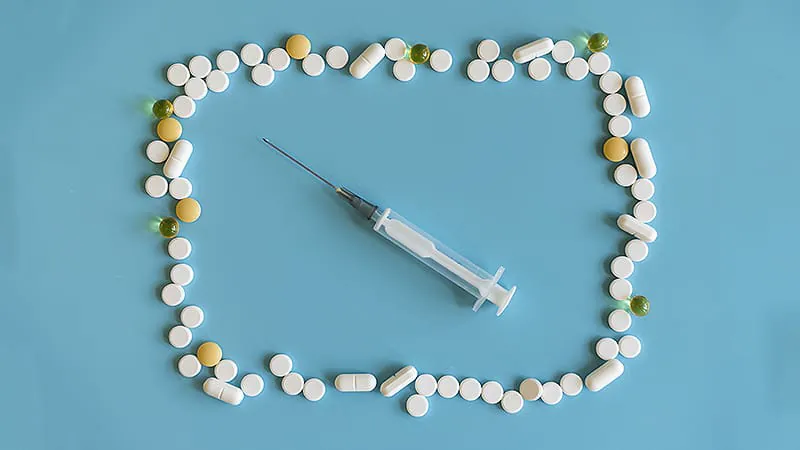
After 50 years of failed drug vaccine attempts, researchers may be closing in on a fentanyl solution. ARMR Sciences' "Fentanyl Armour" has produced the first-ever anti-fentanyl antibodies in humans in a phase 1/2 trial. The vaccine works by intercepting fentanyl in the bloodstream before it reaches the brain — and critically, it doesn't interfere with standard addiction treatments or naloxone rescue.
After five decades of failed attempts to vaccinate against drugs of abuse, researchers are cautiously optimistic about a new experimental vaccine targeting fentanyl. In June, ARMR Sciences reported interim phase 1/2 data showing that its vaccine, Fentanyl Armour, was well tolerated and generated anti-fentanyl antibodies at the lowest dose tested — a first in human history. A challenge phase is now underway, where vaccinated participants will receive pharmaceutical-grade fentanyl under clinical supervision, with respiratory response used as a proxy for overdose protection.
The vaccine trains the immune system to produce antibodies that intercept fentanyl in the bloodstream, forming complexes too large to cross the blood-brain barrier. Importantly, the antibodies don't bind morphine, methadone, buprenorphine, naloxone, or naltrexone — meaning vaccinated patients can continue addiction maintenance therapy and still be rescued with naloxone if needed. A parallel effort at the University of Washington is developing a multivalent vaccine targeting oxycodone, heroin, and fentanyl, though NIH funding cuts have stalled its phase 1 trial.
Key Takeaways:
Why it matters: With nearly 74,000 Americans dying from synthetic opioid overdoses in 2022, a preventive vaccine could be a game-changer — especially as fentanyl increasingly contaminates counterfeit pills. But the field has been burned before, and another high-profile failure could set back the entire immunological approach to addiction medicine.