Curie Brief
Turn on cookies to sign in
Signing in saves your progress to your Curie account. We can only do that with cookies on — turn them on to continue.
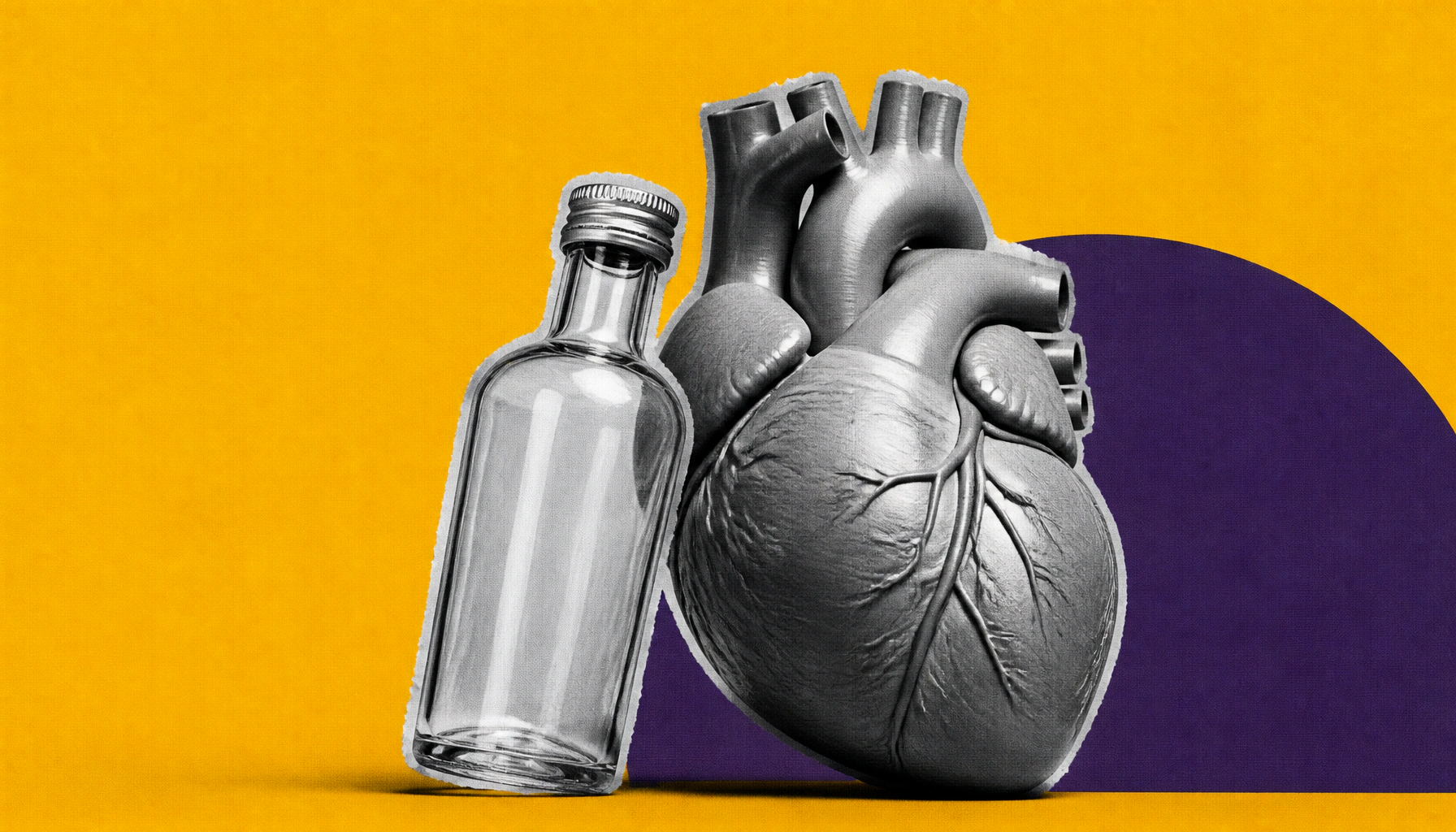
Your mental health after trauma could be hurting your heart. A new study found that alcohol use disorder developing after a traumatic event was the single strongest predictor of major cardiac and cerebrovascular events in both men and women — outranking even PTSD. Researchers say clinicians should screen for a broad range of psychiatric conditions, not just stress disorders, when assessing cardiovascular risk post-trauma.
Your mental health after trauma could be hurting your heart
A large study using Danish population data found that psychiatric disorders developing after traumatic events — particularly alcohol use disorder — are powerful predictors of major adverse cardiac and cerebrovascular events (MACE). Researchers used machine learning to analyze data from residents of Denmark who experienced MACE between 1996 and 2018, matching them to trauma-exposed controls.
Alcohol use disorder topped the list of posttraumatic psychiatric predictors of MACE for both men and women, followed closely by depressive episodes and PTSD/stress-related disorders. While the effect was seen in both sexes, alcohol use disorder's relative impact compared to other psychiatric predictors was somewhat smaller in women than in men.
Key Takeaways
Why it matters: Cardiovascular risk assessment after trauma has historically focused on PTSD. This study signals that clinicians should cast a wider net — screening for alcohol use, depression, and other psychiatric conditions could meaningfully improve heart disease prevention in trauma survivors.