Curie Brief
Turn on cookies to sign in
Signing in saves your progress to your Curie account. We can only do that with cookies on — turn them on to continue.
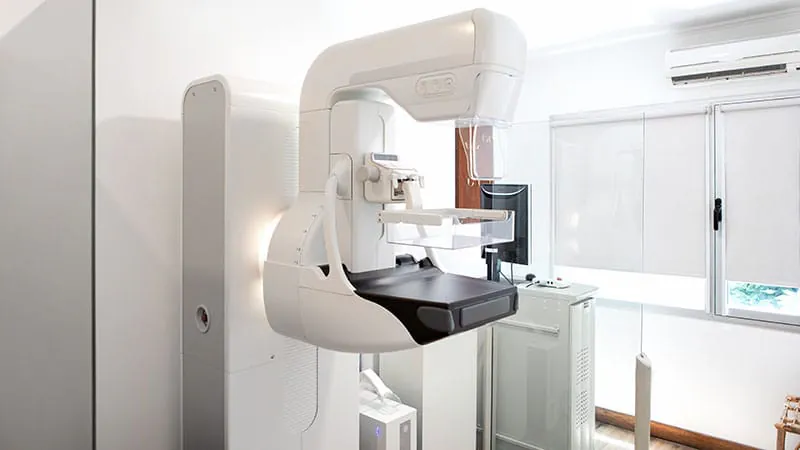
A new deep learning model using 3D mammography (digital breast tomosynthesis) outperformed traditional risk tools in predicting 5-year breast cancer risk. Trained on over 313,000 scans, the model beat both older mammography-based AI and the widely used Tyrer-Cuzick clinical model. It also identified surprising risk subgroups — like low-risk women with very dense breasts and high-risk women with fatty breasts.
A new deep learning model that analyzes longitudinal 3D mammography scans — known as digital breast tomosynthesis (DBT) — is significantly better at predicting a woman's 5-year breast cancer risk than existing tools. Developed by researchers at NYU and trained on over 313,000 DBT exams from more than 161,000 women, the model incorporates multiple scans over time, patient age, and breast density to generate individualized risk estimates.
The model outperformed both a single-timepoint DBT model and the Mirai model (which uses standard 2D mammography), as well as the Tyrer-Cuzick clinical risk model — the current go-to tool that relies on personal and family history. Notably, the model uncovered counterintuitive risk patterns: among women with extremely dense breasts, nearly 40% were reclassified as average risk with very low observed cancer rates, while among women with fatty breasts, a subset was flagged as high risk with meaningfully elevated cancer incidence.
By the Numbers
Why it matters: Current breast cancer risk tools are imprecise, often leading to over- or under-screening. A more accurate, imaging-based AI model could help clinicians better tailor screening intervals and preventive strategies — especially for women whose risk doesn't match what their breast density alone would suggest.