Curie Brief
Turn on cookies to sign in
Signing in saves your progress to your Curie account. We can only do that with cookies on — turn them on to continue.
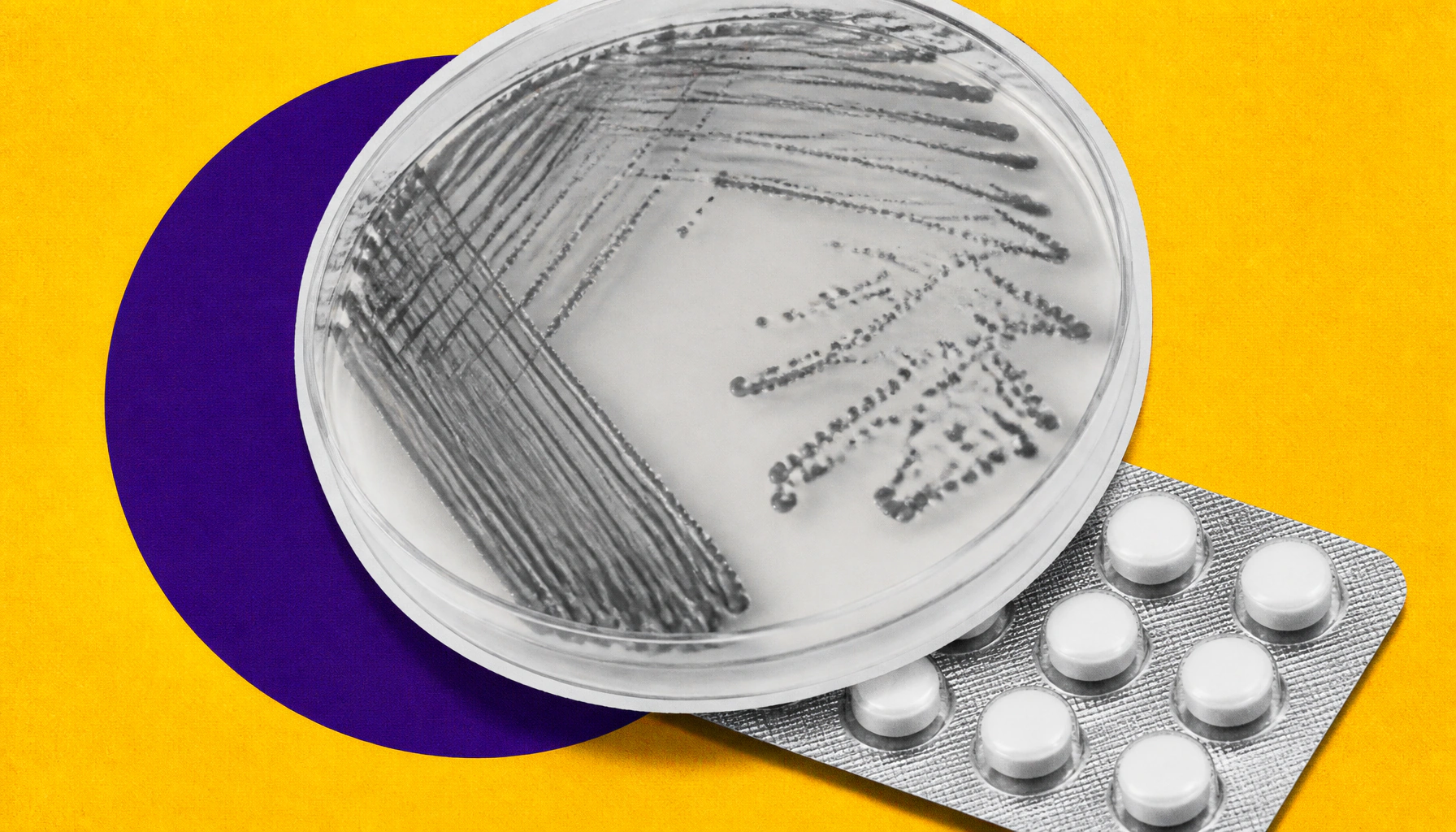
AI is stepping up in the fight against superbugs. Researchers used three AI models to screen nearly 7,000 existing drugs for activity against Streptococcus pneumoniae, a WHO-priority pathogen. Nine of 11 shortlisted compounds successfully inhibited bacterial growth — and one worked even against drug-resistant strains.
Antimicrobial resistance is a growing global crisis, and Streptococcus pneumoniae — the bacteria behind deadly infections like pneumonia and meningitis — is becoming harder to treat with standard antibiotics. Researchers are now turning to artificial intelligence to speed up the search for solutions, and a new study published in Advanced Science shows just how promising that approach can be.
Scientists trained three distinct AI models — decision tree ensembles, graph neural networks, and sequence-based transformers — on datasets of molecules known to be active or inactive against drug-resistant bacteria. Together, these models screened nearly 7,000 existing, approved drugs for potential repurposing against S. pneumoniae. The diversity of models proved key: each complemented the others, making the combined approach more effective than any single model alone.
By the Numbers:
Why it matters: Drug repurposing — using already-approved medications for new purposes — is faster, cheaper, and lower-risk than developing new drugs from scratch. With antimicrobial resistance claiming lives and straining healthcare systems worldwide, AI-driven repurposing offers a scalable, affordable path to new treatments urgently needed on the WHO's priority list.