Curie Brief
Turn on cookies to sign in
Signing in saves your progress to your Curie account. We can only do that with cookies on — turn them on to continue.
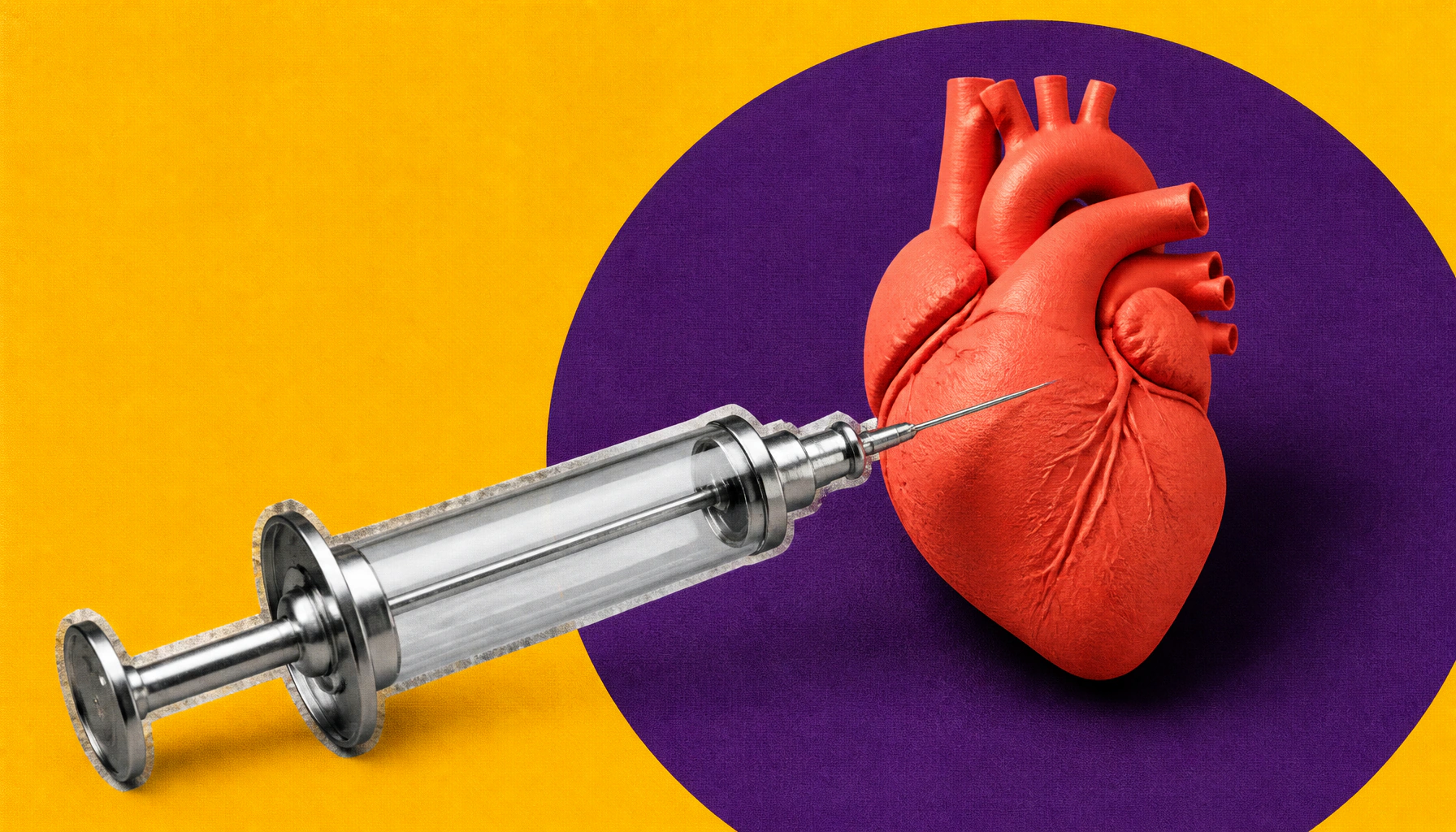
A once-quarterly injection of pacibekitug, an investigational IL-6 inhibitor, cut inflammation markers by up to 85% in patients with chronic kidney disease over six months, with an excellent safety profile. Phase 2 TRANQUILITY trial data presented at ESC 2026 are fueling cautious optimism for a phase 3 cardiovascular outcomes trial — even as a rival IL-6 drug, ziltivekimab, recently failed to reduce heart events in a similar population.
A new investigational drug called pacibekitug — an IL-6 inhibitor dosed just once every three months — dramatically reduced inflammation markers in patients with chronic kidney disease (CKD), according to phase 2 data from the TRANQUILITY trial presented at the European Society of Cardiology Congress 2026. The double-blind trial enrolled 141 adults with stage 3–4 CKD and elevated high-sensitivity C-reactive protein (hs-CRP), and found that the 50 mg quarterly dose cut hs-CRP by 85% over six months. Crucially, the drug was well-tolerated, with a discontinuation rate of just 1.9% and no dose-related safety signals.
The results arrive in the shadow of the ZEUS trial, where ziltivekimab — another IL-6 inhibitor — reduced inflammation but failed to lower major adverse cardiovascular events (MACE) in a similar CKD population. Lead investigator Dr. Deepak Bhatt noted that CKD may simply be the wrong proving ground, and that future phase 3 testing of pacibekitug should focus on patients with coronary atherosclerosis and prior heart attacks, where inflammation is most causally linked to events.
By the Numbers:
Why it matters: Pacibekitug's quarterly dosing and strong biomarker results set it apart from other IL-6 inhibitors, but the field is watching closely to see whether inflammation reduction can actually translate into fewer heart attacks and strokes — a question that remains unanswered.