Curie Brief
Turn on cookies to sign in
Signing in saves your progress to your Curie account. We can only do that with cookies on — turn them on to continue.
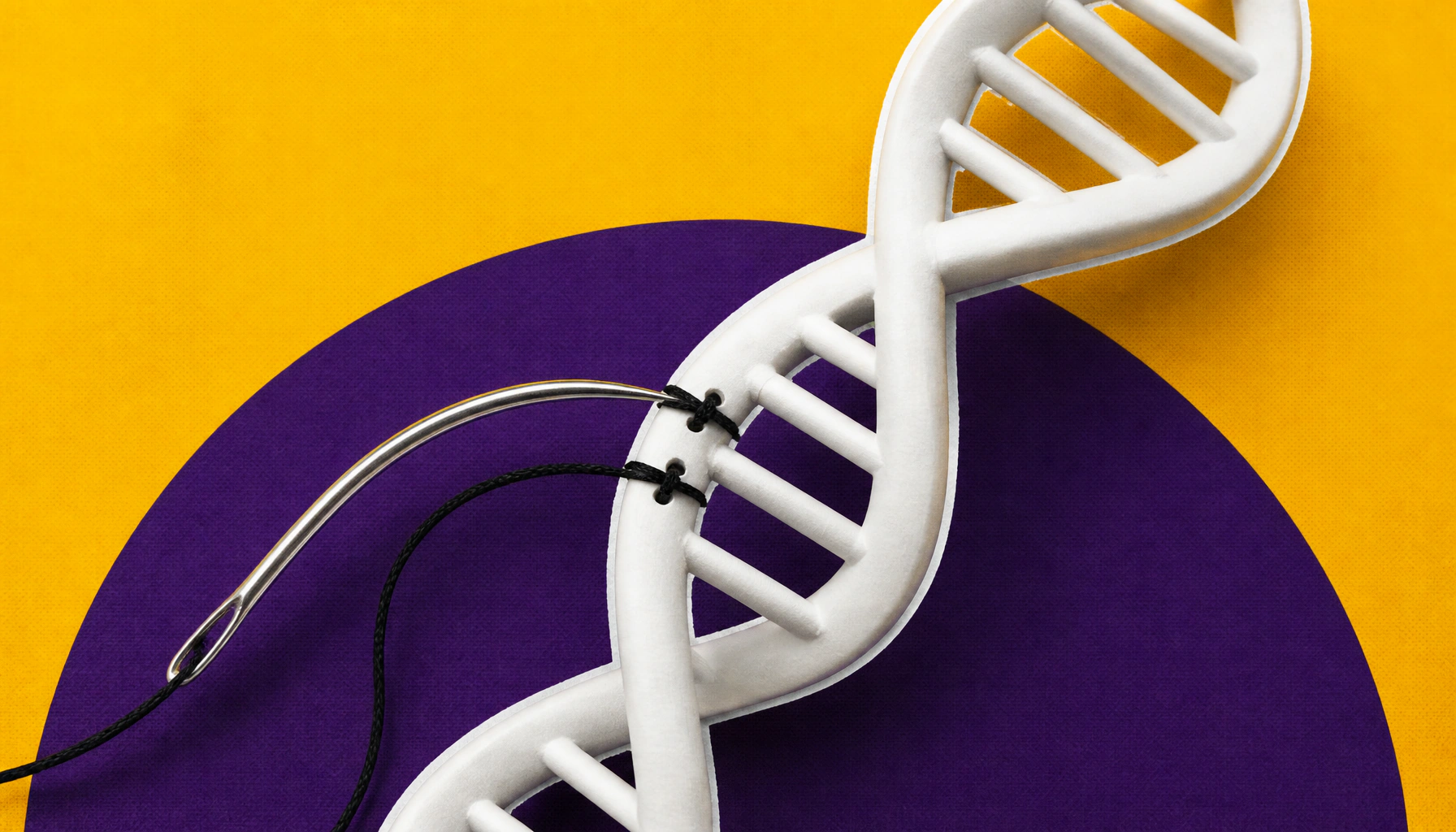
A new genome engineering method called "prime assembly," published in Nature, can stitch long DNA fragments into precise locations within living cells. Unlike current gene-editing tools that require individualized edits, prime assembly could correct nearly any mutation in a gene with a single approach. This could pave the way for universal gene therapies for inherited diseases.
Scientists at Boston Children's Hospital have unveiled a new gene-editing technique called prime assembly, published in Nature, that could be a game-changer for treating inherited genetic diseases. Building on the existing "prime editing" technology, prime assembly goes further by enabling large, gene-sized DNA fragments to be precisely inserted into specific locations in the genome — all in a single step. This means one therapy could potentially correct almost any mutation in a gene, rather than requiring a custom fix for each patient.
What makes prime assembly stand out is its safety profile. It avoids DNA double-strand breaks and double-strand donors — both of which can stress cells and cause unwanted changes — and it works in nondividing cells, which are far more common in the body. Its targeted approach also significantly reduces the risk of accidentally activating the wrong genes, a concern with untargeted methods that can lead to cancerous outcomes.
Key Takeaways:
Why it matters: Many genetic diseases involve hundreds of different mutations, making current gene therapies costly and complex to scale. Prime assembly's mutation-agnostic approach could unlock truly universal treatments for devastating inherited conditions with no current cure.