Curie Brief
Turn on cookies to sign in
Signing in saves your progress to your Curie account. We can only do that with cookies on — turn them on to continue.
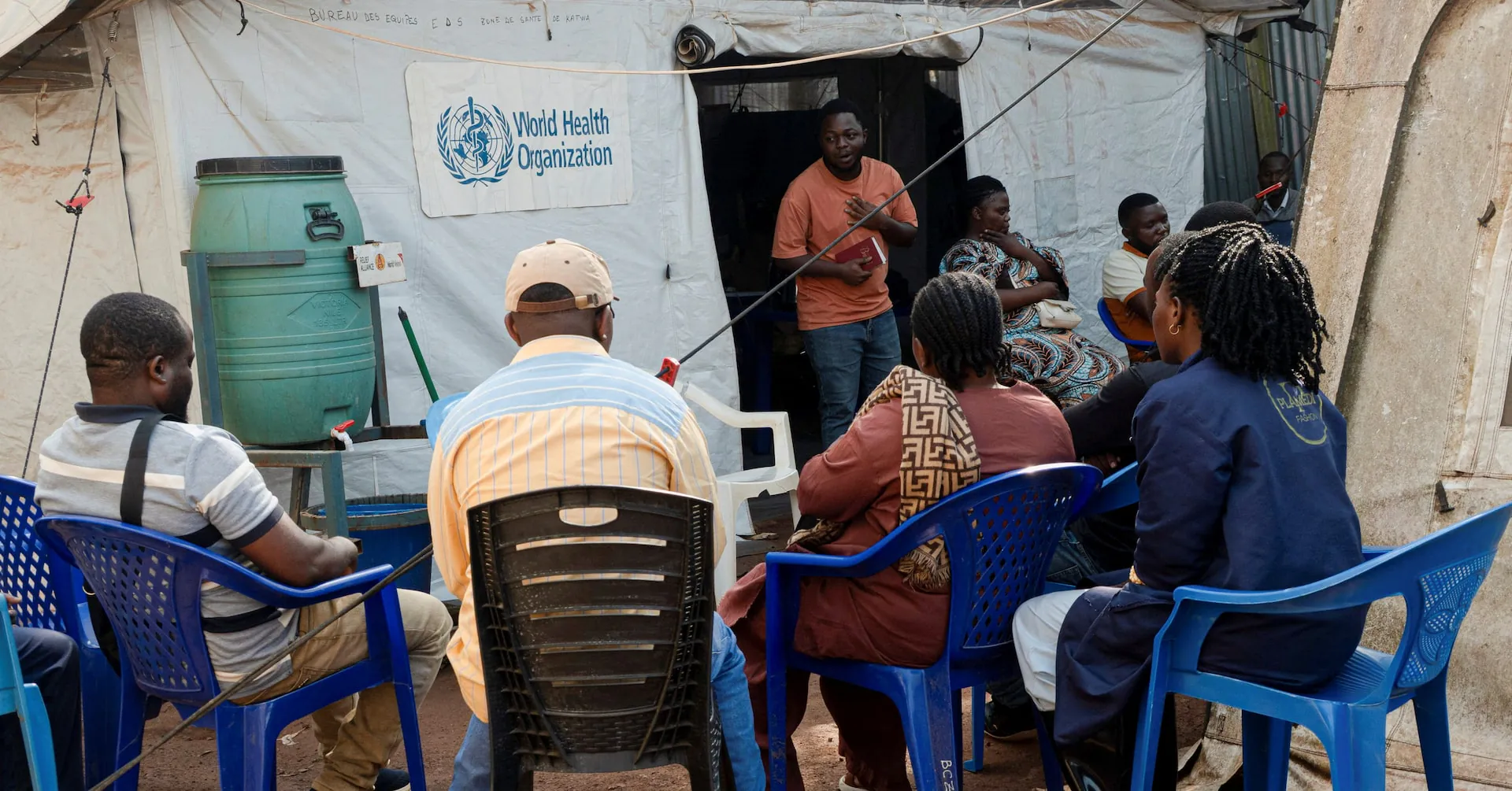
The second deadliest Ebola outbreak on record is showing tentative signs of progress in parts of the Democratic Republic of Congo, but UN officials warn it's too soon to declare a peak. Daily new cases have dipped from ~120 to ~80, yet North Kivu remains a hotspot with cases still rising fast. Officials say it will take "many, many months" to fully contain the epidemic.
The Ebola outbreak ravaging eastern Democratic Republic of Congo — now the second deadliest on record — is showing some early signs of slowing, but UN officials are urging caution. WHO's Olivier Le Polain put it plainly: "It's too early to confidently say we have passed a peak," adding that full containment will require "many, many months" and significant international support.
Congo's Health Minister struck a cautiously optimistic tone, noting that daily new cases have fallen from a peak of ~120 in mid-August to around 80, and that 10 of the 62 affected health zones have gone more than 22 days without a new case. In Ituri province — the hardest-hit region — local officials say the situation has improved considerably. But in North Kivu, cases are still climbing fast, with MSF warning that high population density, mobility, and a complex security environment make the situation there "alarming."
By the Numbers:
Why it matters: This outbreak — surpassed in lethality only by the 2014–2016 West Africa epidemic — underscores how quickly Ebola can spiral in conflict-affected, densely populated regions. Premature optimism could be dangerous; sustained global support and vigilance remain critical to preventing a resurgence.