Curie Brief
Turn on cookies to sign in
Signing in saves your progress to your Curie account. We can only do that with cookies on — turn them on to continue.
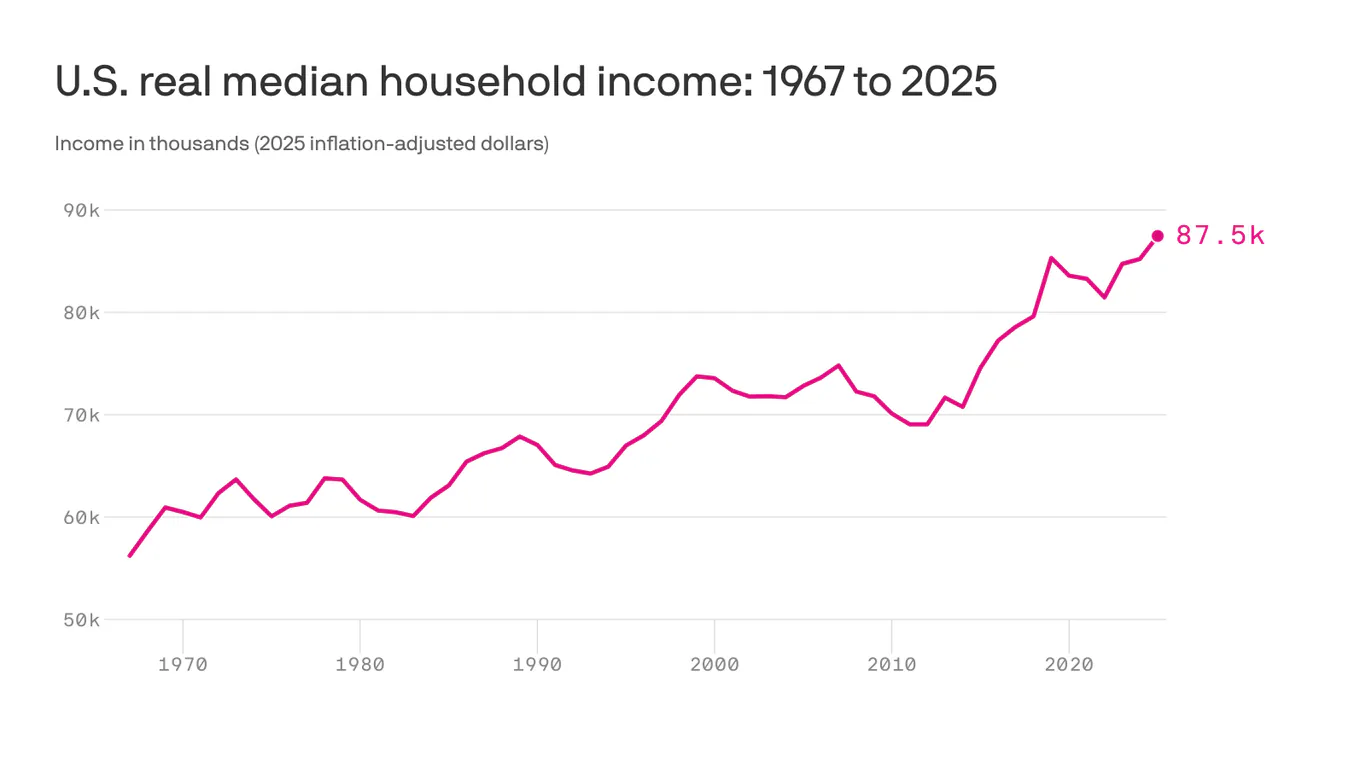
America's income numbers look great on paper — but millions are still getting squeezed. New Census data show median household income hit an all-time high in 2025, yet the lowest earners saw no meaningful gains. Medical costs pushed an estimated 7.7 million people below the poverty line, and Medicaid coverage quietly shrank by about 1.4 million people.
America's headline economic numbers are historic — but the fine print tells a more complicated story. New 2025 Census data show real median household income climbed to $87,460, the highest inflation-adjusted level since records began in 1967. Official poverty fell for a third straight year, and child poverty hit a record low. Yet the bottom 10% of earners saw no significant income gains, while the top 10% captured most of the growth.
Healthcare remains a major fault line. Medical expenses alone pushed an estimated 7.7 million people below the Supplemental Poverty Measure threshold. Medicaid coverage dropped by roughly 1.4 million people, driven by a decline among working-age adults — and this data was collected before the major safety-net cuts in the "Big Beautiful Bill" took effect, meaning the 2025 figures may represent a high-water mark.
By the Numbers:
Why it matters: These numbers serve as a critical baseline. With federal safety-net programs now facing significant cuts, healthcare providers and policymakers should expect rising uninsured rates and increased financial hardship — particularly among low-income, Hispanic, and working-age adult populations — in the years ahead.