Curie Brief
Turn on cookies to sign in
Signing in saves your progress to your Curie account. We can only do that with cookies on — turn them on to continue.
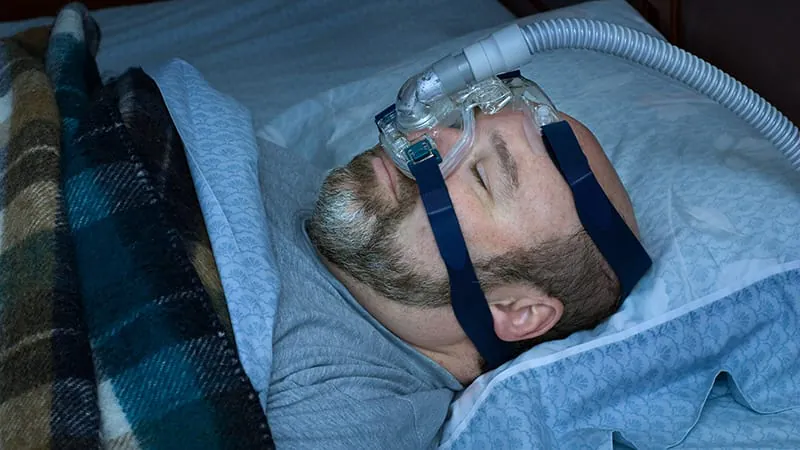
GLP-1 receptor agonists like tirzepatide are reshaping how doctors treat obstructive sleep apnea (OSA), but experts say they're not a cure-all. While tirzepatide cut apnea severity significantly in the SURMOUNT-OSA trial, about half of patients still had clinically significant residual disease. Combination therapy with CPAP may offer the best outcomes for most patients with OSA and obesity.
GLP-1 receptor agonists (GLP-1 RAs) are generating serious buzz as a treatment option for obstructive sleep apnea (OSA), and for good reason — but experts are urging caution before declaring them a game changer. Presented at the 2026 European Respiratory Society Congress, a review of the evidence highlighted both the promise and the limits of these medications for OSA management.
The SURMOUNT-OSA trial showed that tirzepatide produced roughly 20% weight loss and reduced the apnea-hypopnea index (AHI) by 25–29 events per hour over 52 weeks — impressive enough to earn FDA approval for OSA. A separate retrospective study of 133,000+ OSA patients found GLP-1 RA use was linked to significantly lower rates of heart failure, cardiac arrest, and myocardial infarction, especially in those not using CPAP. Two large real-world studies also found GLP-1/dual agonist therapy reduced new-onset OSA incidence by 54% in patients with obesity.
Key Takeaways:
Why it matters: GLP-1 RAs are a meaningful addition to the OSA treatment toolkit, but they work best as part of a combination approach. Long-term cardiovascular data are still lacking, and since not all OSA patients are obese, CPAP remains essential for many.