Curie Brief
Turn on cookies to sign in
Signing in saves your progress to your Curie account. We can only do that with cookies on — turn them on to continue.
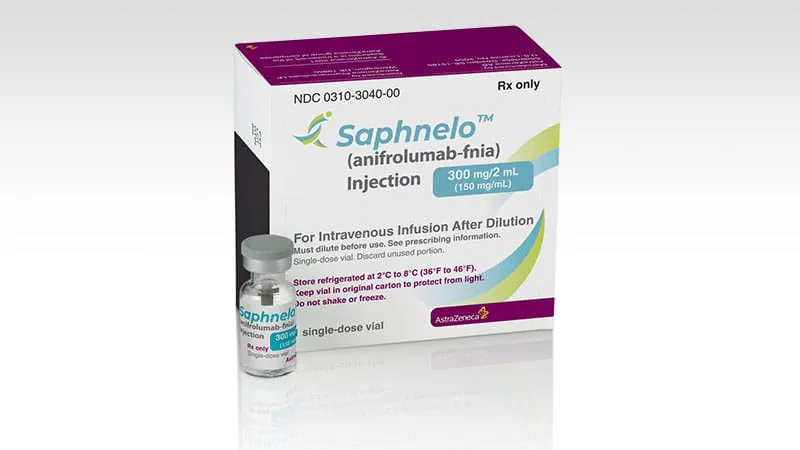
A new study finds anifrolumab (Saphnelo) significantly outperforms conventional immunosuppressants in treating refractory chronic cutaneous lupus erythematosus (CLE), with better skin outcomes and fewer serious infections. Patients on anifrolumab monotherapy had zero hospitalizations, compared to nearly a third of those on older drugs. The findings add momentum to the case for targeted therapies in skin lupus.
A retrospective study published in the Journal of the European Academy of Dermatology and Venereology suggests that anifrolumab — a monoclonal antibody targeting the type 1 interferon receptor — may be both more effective and safer than conventional immunosuppressants for patients with hydroxychloroquine-refractory chronic cutaneous lupus erythematosus (CLE). The study analyzed 71 patients across three treatment groups and found that anifrolumab delivered notably better skin outcomes at six months and a more favorable infection profile over one year.
While overall infection rates were similar across groups (~65–69%), the differences in severity were striking. Patients on anifrolumab monotherapy were far less likely to need antibiotics or be hospitalized — a meaningful distinction given the chronic, relapsing nature of lupus.
By the Numbers:
Why it matters: There's currently no FDA-approved treatment specifically for CLE, making these findings especially timely. With the phase 3 LAVENDER trial underway, anifrolumab could soon offer dermatologists a targeted, better-tolerated option for a condition that has long relied on broad-acting, older drugs.