Curie Brief
Turn on cookies to sign in
Signing in saves your progress to your Curie account. We can only do that with cookies on — turn them on to continue.
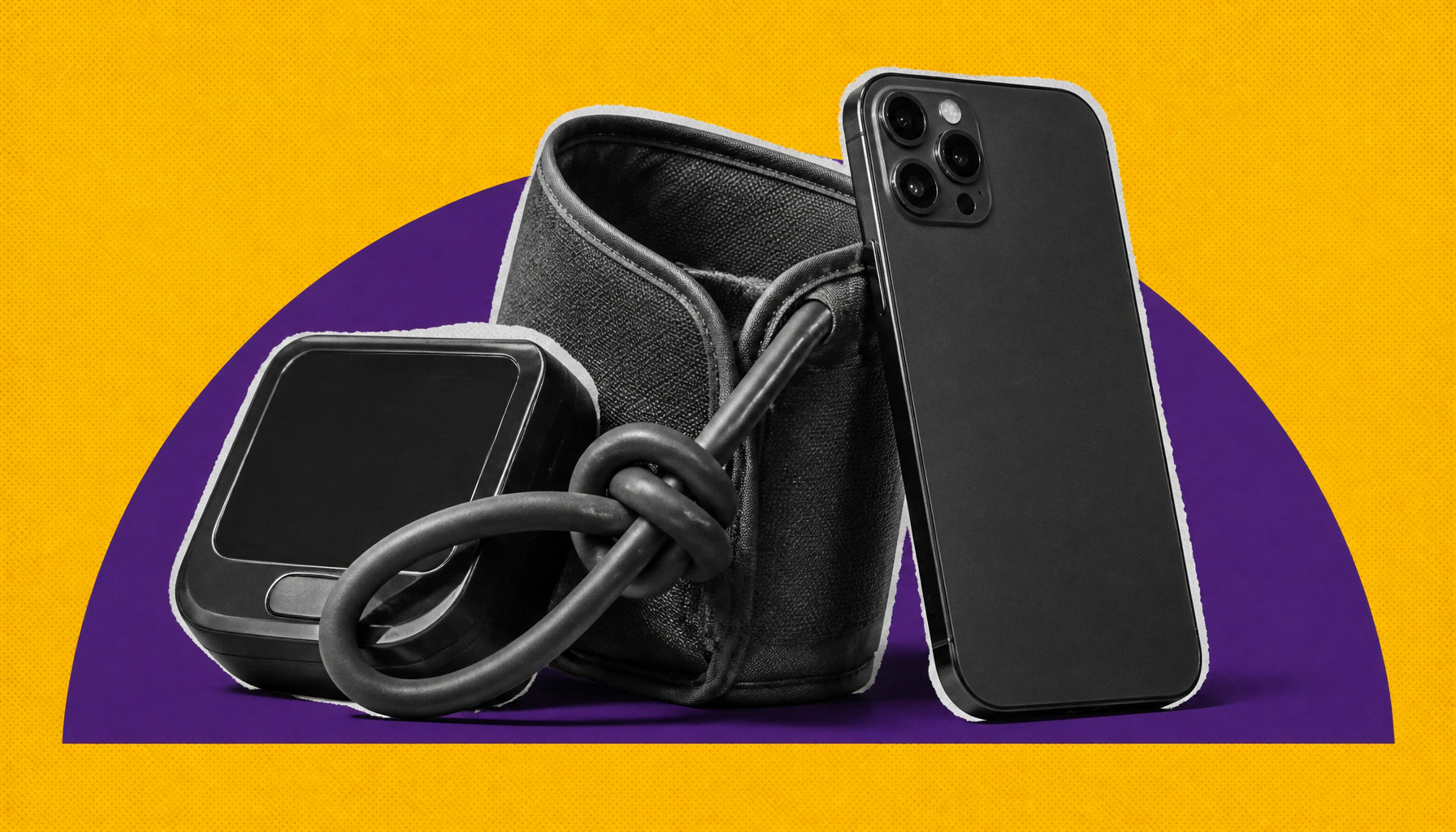
A machine-learning algorithm can detect hypertension and type 2 diabetes from a short facial video — no cuff, no finger stick required. Presented at the ESC Congress, the tool achieved up to 95% accuracy for hypertension and 88% for diabetes using just 30 seconds of footage. Researchers say it could become a scalable, contactless screening tool for cardiovascular and metabolic risk factors.
No cuff? No problem. Researchers from the University of Tokyo Hospital have developed a machine-learning algorithm that detects hypertension and type 2 diabetes from brief spectroscopic facial videos — entirely contactless and without any blood sampling. Presented at the European Society of Cardiology Congress in Munich, the study analyzed data from over 200 participants and extracted three types of features from video: pulse wave dynamics, skin blood-flow patterns, and spectral characteristics.
The algorithm works fast, too. In as little as 5 seconds of footage, it can flag hypertension with 90% accuracy and diabetes with 81% accuracy. With 30 seconds of data, those numbers climb to 95% and 88%, respectively. The system also estimates blood pressure values directly from facial video alone, with a mean absolute percentage error of just 9.7%.
By the Numbers:
Why it matters: Traditional screening for hypertension and diabetes requires clinical visits or wearables — barriers that limit population-level reach. A quick, camera-based AI tool could expand screening to gyms, pharmacies, or even smartphones, catching high-risk individuals earlier and reducing the burden on healthcare systems. Larger, more diverse validation studies are still needed before clinical deployment.