Curie Brief
Turn on cookies to sign in
Signing in saves your progress to your Curie account. We can only do that with cookies on — turn them on to continue.
Your routine blood pressure test might be missing a major clue. Researchers found that primary aldosteronism — a hormone disorder affecting up to 1 in 5 people with hypertension — causes nighttime hormone bursts that standard blood tests routinely miss. A wearable device that monitors hormones every 20 minutes around the clock could change how this treatable, and sometimes curable, condition is diagnosed.
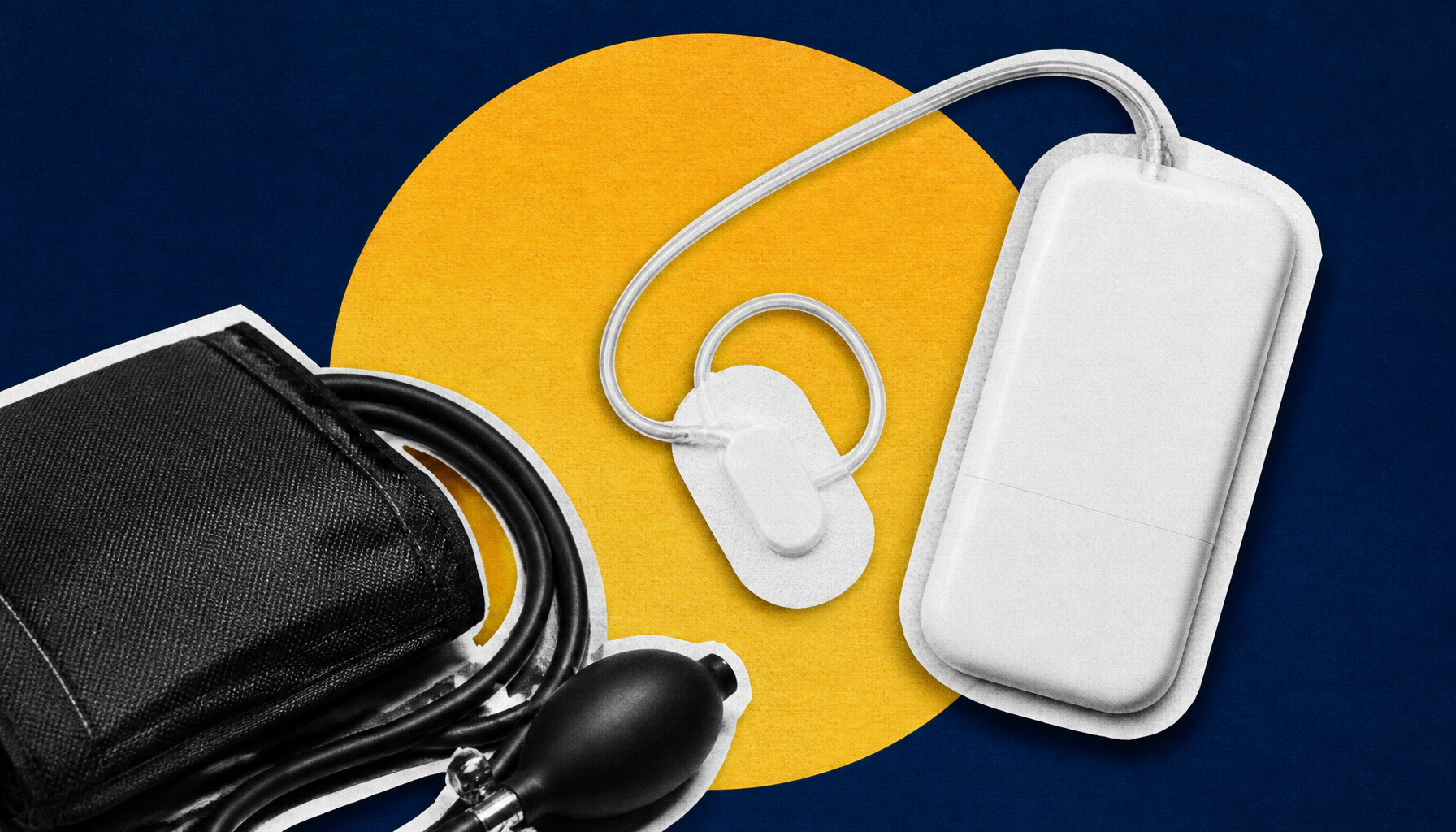
A wearable device about the size of a mobile phone may be about to shake up how doctors diagnose one of the most commonly overlooked causes of high blood pressure. Researchers from the University of Bristol, University of Manchester, and international collaborators published findings in Science Translational Medicine showing that primary aldosteronism — a hormone disorder potentially affecting up to 1 in 5 people with hypertension — produces hidden nighttime hormone surges that a single routine blood test simply can't catch.
The culprit? Aldosterone, a hormone that regulates salt and water balance, doesn't stay consistently elevated in affected patients. Instead, it spikes in bursts — especially at night — meaning a snapshot blood draw could look completely normal even in severe cases. The wearable device, called U-RHYTHM, sampled hormone levels every 20 minutes over 24 hours while patients went about their normal lives at home.
By the Numbers:
Why it matters: Primary aldosteronism is linked to heart disease, stroke, and diabetes — but it's also potentially curable. Earlier detection through continuous hormone monitoring could prevent serious cardiovascular complications for millions of people whose diagnosis is currently delayed or never made.