Curie Brief
Turn on cookies to sign in
Signing in saves your progress to your Curie account. We can only do that with cookies on — turn them on to continue.
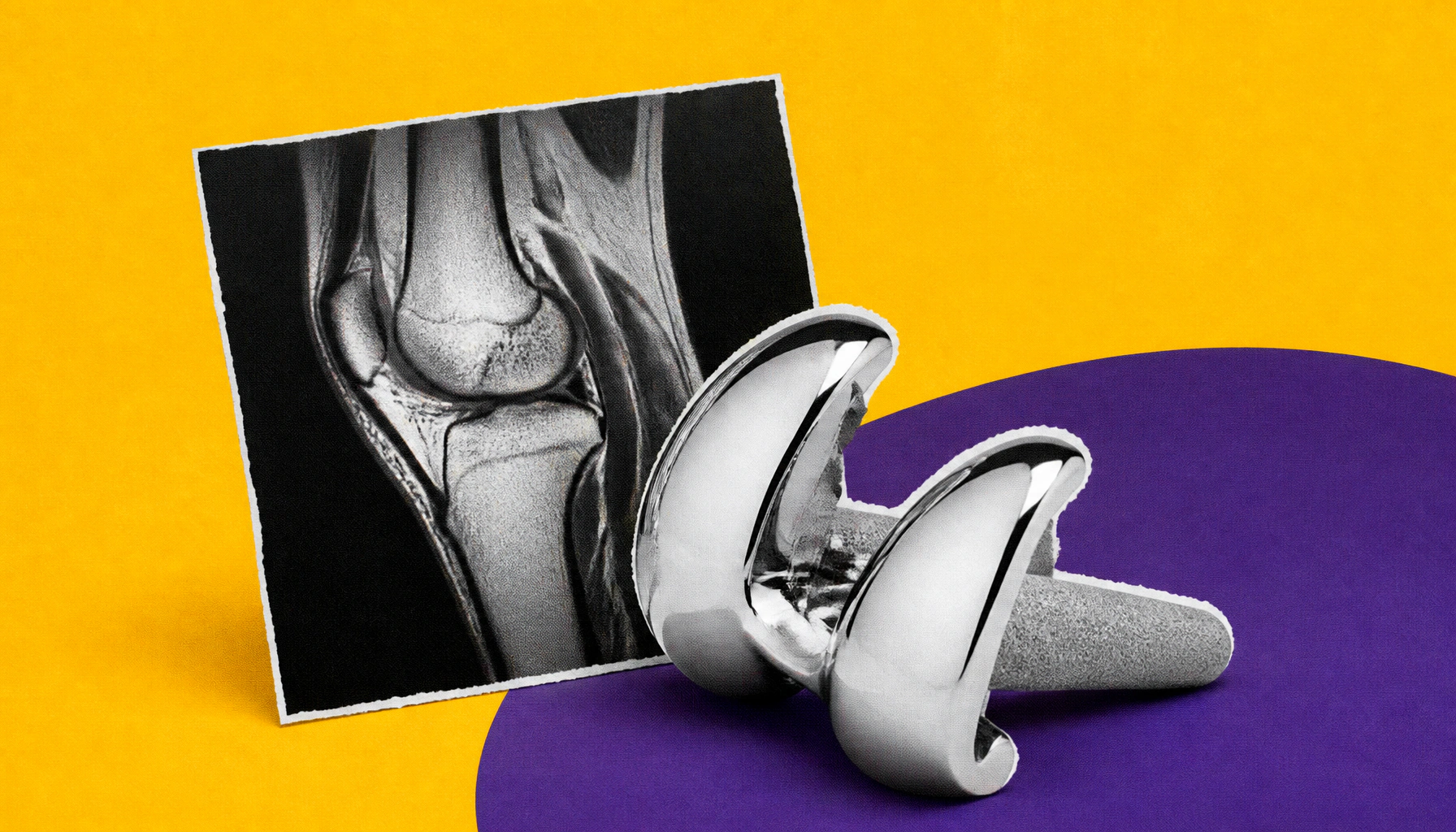
AI can read your knee MRI as well as a human expert. A new study found that fully automated, AI-based cartilage segmentation on MRI predicted the need for knee replacement just as accurately as manual analysis by trained specialists. Researchers say this could make MRI-based cartilage assessment a scalable tool for clinical trials of knee osteoarthritis treatments.
AI can read your knee MRI as well as a human expert
A new study published in Arthritis Care & Research found that fully automated, AI-based cartilage segmentation on MRI performed just as well as manual human analysis in predicting which patients with knee osteoarthritis would go on to need knee replacement surgery. Researchers used data from the Osteoarthritis Initiative, comparing AI and human analysis across two MRI techniques — DESS and FLASH — in matched patient groups.
The key metric was change in cartilage thickness in the medial femorotibial compartment over the two years before knee replacement. Results were consistent across different MRI acquisitions, orientations, and contrasts, suggesting the AI approach is robust and reliable.
By the Numbers
Why it matters: Scaling up cartilage analysis for large clinical trials has long been a bottleneck — it's slow and expensive when done manually. An AI-driven approach that matches human accuracy could accelerate the development of disease-modifying treatments for knee osteoarthritis, a condition affecting millions worldwide.