Turn on cookies to sign in
Signing in saves your progress to your Curie account. We can only do that with cookies on — turn them on to continue.
Scientists at the University of Tokyo have discovered that some Cas12m proteins — long thought to be inactive — can actually cut DNA. Using cryo-electron microscopy, the team pinpointed the structural differences between active and inactive versions, laying the groundwork for smaller, more deliverable gene-editing tools with big potential in medicine and biotech.
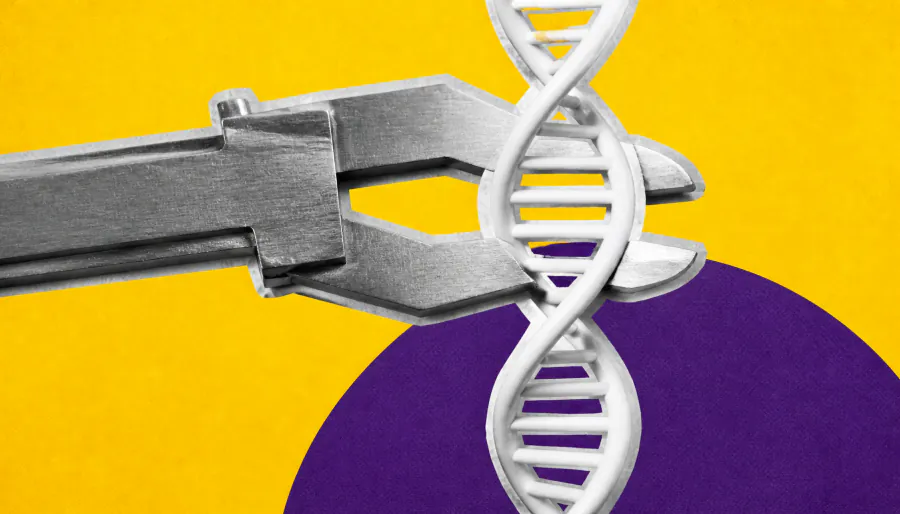
For years, Cas12m proteins were the odd ones out in the CRISPR family — scientists assumed none of them could cut DNA, unlike most of their Cas protein cousins. Now, a University of Tokyo research team has flipped that assumption on its head, proving that some Cas12m proteins are, in fact, capable of cleaving DNA. The findings, published in Nature Chemical Biology, could open a new chapter in compact gene-editing technology.
The team developed a bacterial screening system to sift through many Cas12m candidates and identify the DNA-cutters. They then used cryo-electron microscopy to map the 3D atomic structures of both active and inactive proteins — a painstaking process that revealed surprisingly subtle differences between the two. By swapping out specific amino acids, they pinpointed exactly what makes the active protein, UnCas12m4a, work while others don't.
Key Takeaways:
Why it matters: Smaller gene-editing tools are a major goal in the field — they're easier to deliver into human cells, which is one of the biggest hurdles in gene therapy. This discovery gives researchers a new blueprint for building compact, effective editors that could one day treat genetic diseases.