Turn on cookies to sign in
Signing in saves your progress to your Curie account. We can only do that with cookies on — turn them on to continue.
A one-time brain cell transplant could transform treatment for drug-resistant epilepsy. The phase 3 EPIC trial is testing rezanecel — a therapy that transplants inhibitory brain cells directly into the seizure focus — in adults whose epilepsy doesn't respond to medication. Early-phase data showed an 89% median seizure reduction in some patients, fueling optimism ahead of the larger, sham-controlled study.
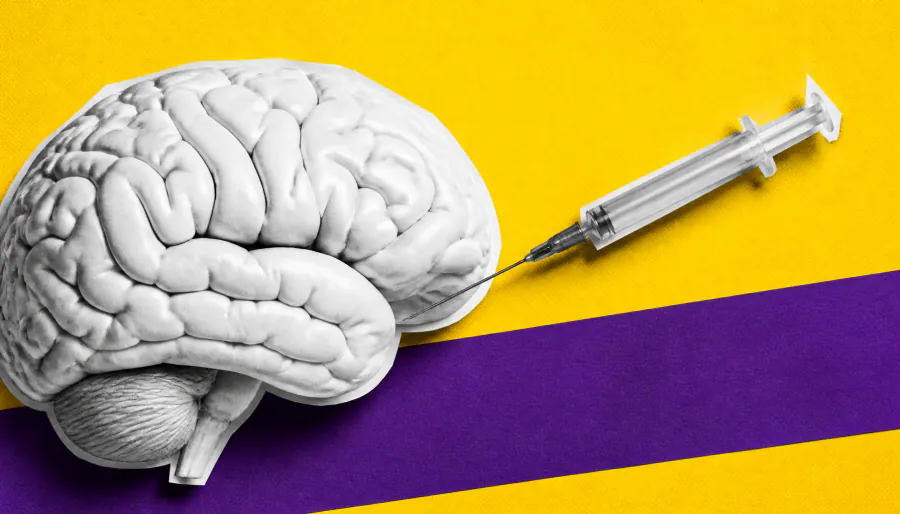
For the roughly one-third of epilepsy patients whose seizures don't respond to medication, options are limited — and often involve removing or destroying brain tissue. Rezanecel, an investigational cell therapy developed by UCB (formerly Neurona Therapeutics), aims to change that with a one-time injection of inhibitory brain cells directly into the hippocampus, the seizure hotspot in mesial temporal lobe epilepsy (MTLE).
The phase 3 EPIC trial (NCT05135091) will enroll ~60 adults with drug-resistant MTLE, randomized 2:1 to receive rezanecel or a sham procedure. The primary endpoint is the difference in median percent change in disabling seizure frequency at 4–6 months post-procedure. Participants will be followed for up to 15 years, with enrollment expected to begin in early 2027 across 36 U.S. sites.
By the Numbers:
Why it matters: If the phase 3 results hold up, rezanecel could offer a non-destructive, durable alternative to brain surgery for patients with drug-resistant epilepsy — a population with very few good options today.