Turn on cookies to sign in
Signing in saves your progress to your Curie account. We can only do that with cookies on — turn them on to continue.
The FDA has approved bezuclastinib (Ekitna) in combination with sunitinib for adults with advanced gastrointestinal stromal tumors (GIST) previously treated with imatinib — the first new second-line therapy for GIST in 20 years. The phase 3 PEAK trial showed the combo nearly doubled median progression-free survival (16.5 vs. 9.2 months) and cut the risk of progression or death by 50% compared to sunitinib alone.
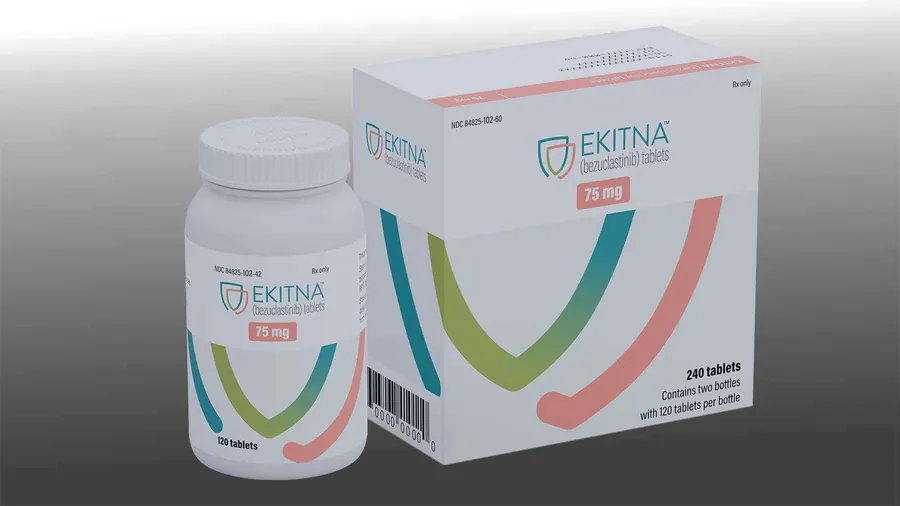
The FDA has approved bezuclastinib (Ekitna) combined with sunitinib (Sutent) for adults with advanced gastrointestinal stromal tumors (GIST) who have previously been treated with imatinib — marking the first new second-line treatment for GIST in two decades. The approval is backed by the phase 3 PEAK trial, a global, randomized study of 413 patients with locally advanced, unresectable, or metastatic GIST that had progressed on or was intolerant to imatinib.
The combination works by providing complementary KIT inhibition: bezuclastinib targets activation loop mutations (exons 17/18), while sunitinib covers ATP-binding pocket mutations (exons 13/14), together offering broad coverage of primary and secondary KIT resistance mutations. Crossover data from PEAK also showed that patients who progressed on sunitinib alone still benefited from switching to the combination, with a median PFS of 7.4 months and an ORR of 29.7% post-crossover.
By the Numbers:
Why it matters: This approval reshapes the GIST treatment landscape, giving oncologists a more effective second-line option backed by robust phase 3 data. For patients whose disease progresses on imatinib, bezuclastinib plus sunitinib now sets a new standard of care.