Turn on cookies to sign in
Signing in saves your progress to your Curie account. We can only do that with cookies on — turn them on to continue.
Hard water at home linked to higher glaucoma risk. A large UK study found that people exposed to harder household water — rich in calcium and magnesium — had up to 23% greater risk of developing glaucoma over 14 years. Magnesium showed the strongest and most consistent link, though the exact biological mechanism remains unclear.
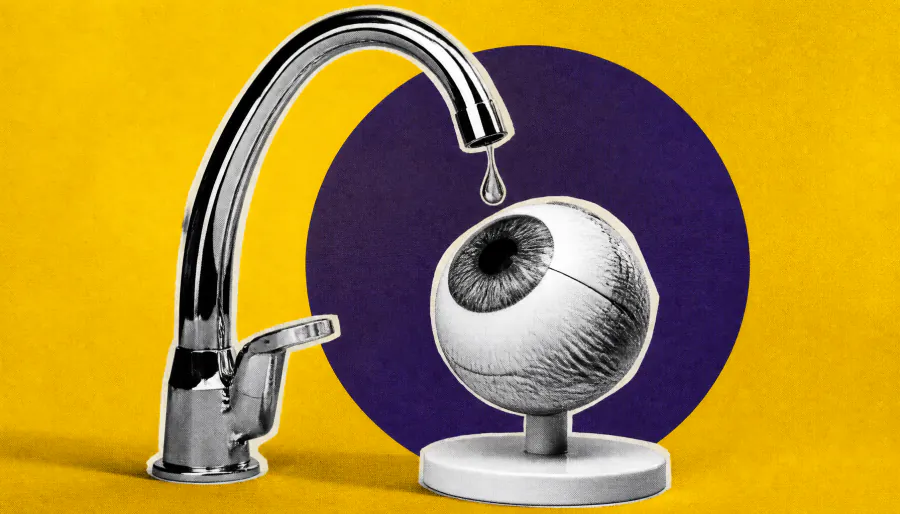
What's in your tap water might matter more than you think — at least for your eyes. A new study published in Investigative Ophthalmology & Visual Science found that people exposed to harder household water had a meaningfully higher risk of developing glaucoma over time. Researchers analyzed UK Biobank data from over 434,000 people without glaucoma at baseline, tracking them for a median of 14 years.
The culprits? Dissolved minerals — primarily calcium and magnesium — that define water "hardness." These minerals play roles in vascular function, cellular ion balance, and neuronal signaling, making a biological link to glaucoma plausible. Notably, the association didn't appear to work through elevated intraocular pressure (IOP), suggesting a more complex underlying pathway.
By the Numbers:
Why it matters: This study adds water mineral composition to the growing list of environmental factors — alongside air pollution and sunlight — that may influence glaucoma risk. While causality isn't established, the findings open the door to new research on modifiable environmental exposures in eye disease prevention.