Turn on cookies to sign in
Signing in saves your progress to your Curie account. We can only do that with cookies on — turn them on to continue.
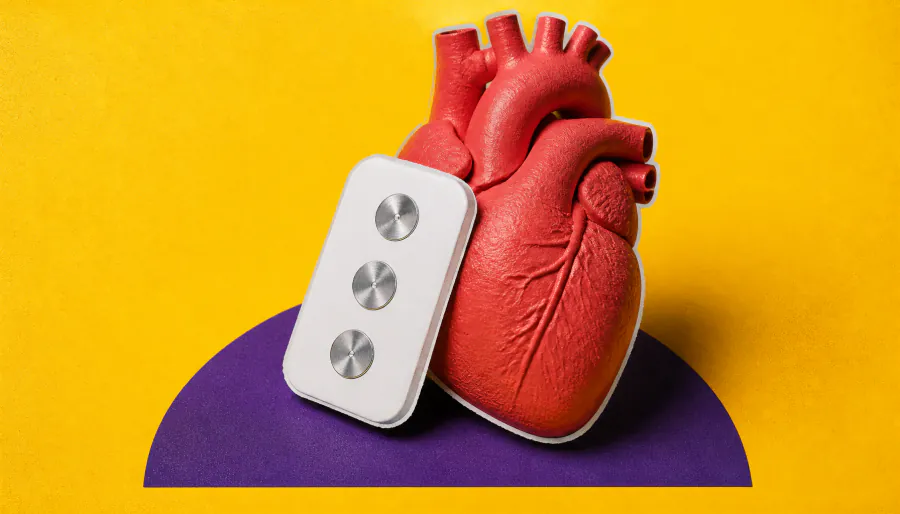
A pocket-sized, self-applied ECG device may help patients identify heart attacks before reaching the hospital. The HeartBeam 3L captures a 30-second 3D cardiac recording that's instantly sent to a remote cardiologist for review. In a study of 132 ED patients, it performed comparably to a standard 12-lead ECG — potentially closing the critical gap between symptom onset and seeking care.
A credit card-sized device that patients can press to their own chest for 30 seconds may soon help close one of cardiology's most dangerous gaps: the delay between when heart attack symptoms start and when a patient decides to seek help. The HeartBeam 3L captures a three-dimensional ECG recording and transmits it instantly to a remote, on-call cardiologist, who can advise the patient on whether to seek emergency care — all without a clinical setting or trained staff.
Presented at TCT 2026, a study of 132 ED patients with suspected acute coronary syndrome (ACS) found the device performed comparably to the gold-standard 12-lead ECG, with even higher specificity and better interrater agreement among interpreting physicians.
By the Numbers:
Why it matters: Most heart attack deaths and permanent damage occur in the window before patients reach the hospital. A device that brings objective, physician-reviewed cardiac data to that critical moment could meaningfully accelerate care-seeking — and ultimately save lives.