Turn on cookies to sign in
Signing in saves your progress to your Curie account. We can only do that with cookies on — turn them on to continue.
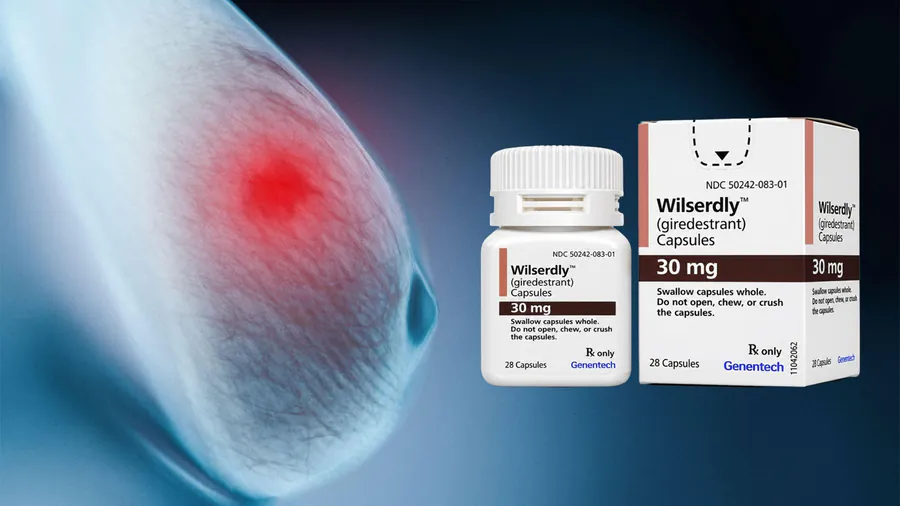
A long-awaited milestone in breast cancer care: the FDA has approved giredestrant (Wilserdly) as adjuvant therapy for early-stage, hormone-driven breast cancer — the first new hormone therapy for this setting in more than two decades. The oral SERD cut the risk of invasive cancer recurrence or death by 30% compared to standard hormone therapy in a large phase III trial. Fewer patients also stopped treatment due to side effects.
The FDA has approved giredestrant (Wilserdly, Genentech) for the adjuvant treatment of adults with stage I–III estrogen receptor (ER)-positive, HER2-negative breast cancer at intermediate-to-high risk of recurrence following surgery — marking the first new hormone therapy approved for early breast cancer in over 20 years. The once-daily oral selective estrogen receptor degrader (SERD) is taken for 5 years and is designed to reduce the risk of cancer coming back after surgery.
The approval was based on results from the phase 3 lidERA Breast Cancer trial, in which giredestrant outperformed standard endocrine therapy (tamoxifen or an aromatase inhibitor) across key efficacy measures, with a more favorable tolerability profile.
By the Numbers:
Why it matters: For the millions of patients diagnosed with early-stage, hormone receptor–positive breast cancer each year, the goal after surgery is preventing recurrence. Giredestrant now offers a more effective oral option that patients tolerate better than existing therapies — a meaningful step forward after two decades without a new hormone therapy in this setting.